I find it difficult to write about the Armenian Genocide each year, but I feel that doing so is a personal obligation that I have in order to acknowledge the atrocities of April 24, 1915.
The reality is that as a musician, I outwardly commemorate the Genocide in most of my performances. When given the opportunity to perform in a concert, there is a storytelling component that I have incorporated into those performances. No, I am not a historical expert by any means, but I can related personal experiences woven with some historical elements while playing Armenian folk music. As a matter of fact, I feel that I am performing at my best ability when given the opportunity to talk and interact with my audience while providing insight into the Armenian culture.
My children showing the Armenian villages their great grandparents were from prior to the Genocide.
Storytelling, an important tool can be one of our most powerful means for conveying important topics. My storytelling focuses on the struggles and triumphs of the Armenian people. After these types of performances, I can’t help but feel a sense of achievement. This is not meant to sound arrogant, but when given the opportunity to share ones culture with a group of people that may be hearing about it for the first time – there is a sense of pride you feel for providing this enlightenment. I have never experienced an audience that was unappreciative of this concept of performance. So many, for the first time, get a glimpse of what is an Armenian. I think this is all of our (as Armenians) obligations to teach others and share stories to a non-Armenian world.
Ironically on April 24th, I had an opportunity to be interviewed by the niece of a friend of mine (non-Armenian) who was working on a college research project focusing on different ethnicities. We had a wonderful conversation and I was able to share with her some historical information but also provided her with my personal thoughts and impressions of our rich culture and background. This had more to do with educating her about the Armenian people as supposed to me as an Armenian. This, proves my point of the gratification I feel in sharing those experiences.
105 years later, we are a strong people. Our memory has not wavered these many years and I pray we will never forget.
On this day, I especially think of family. My parents, grandparents, and their ancestors that gave their life for us to continue our own. On this day, please share your story.
Over the past several weeks, we have seen many relief funding mechanisms come together for the small business community throughout the United States. These have ranged from mini-grants to larger scaled loan programs. It seems that many of these funds started to grow once the Federal stimulus package was created.
Doing my small part to bring awareness to the Michigan Relief Fund to help full time artists in dire financial distress.
Artists are businesses too. They have the same needs as other small businesses, but sometimes are not taken as seriously because of the nature of their business. These artists solely make their income from displaying or sharing their art in person. Whether it is a music playing a festival or event or a painter showing their work at a gallery, these artists are dependent on the personal connection and since COVID-19 has halted any gatherings, the livelihood of this industry has also been silenced.
Temporarily or not, any disruption an artist experiences can be a severe one as many artists are normally underpaid and therefore some have to live from gig to gig. It is the reality of being a full time artist.
Fortunately, the artist community is responding in many different ways.
Artists are forcing to reinvent themselves by moving to a virtual platform and offering concerts, both solo or with video conferencing with other isolated artists. We are seeing musical concerts from local musicians to world-renown musical acts. Many musicians are playing for free and some are asking for donations so that they can continue their efforts.
Artist organizations around the country are trying to do their part and help those same artists that may be experiencing dire financial issues. Check out some of these resources as well as what some of the bigger foundations are doing in response to COVID-19:
The American for the Arts has created a survey for gathering critical information of each artist so that they can share their story so that they can be supported through this crisis. Click here to access the survey.
In the past several days, we have all been experiencing surreal moments in our lives pertaining to the corona virus pandemic. This hits hard for each of us in different ways and how we react and respond will indicate the length of a stranglehold this virus will have on humanity.
Each of us are probably already on overload when it comes to listening to the news detailing the consistent updates and the severity of COVID-19. Each day when I wake, I cant help but think “I wonder how bad it will get today”. In a matter of one week, many of our lives in the US have turned upside down with working from home (for those of us that have that option) and watching business after business closing down to help #flattenthecurve. I am only venturing out to obtain the essentials and I have going into several grocery stores just to find the basics and I am met with empty shelves, social distancing markers on the ground and even individuals in full HazMat outfits. Each day brings me to a point of limiting those trips. It’s real and scary.
As a musician and as it relates to COVID-19, I recently had an experience that promoted this writing piece.
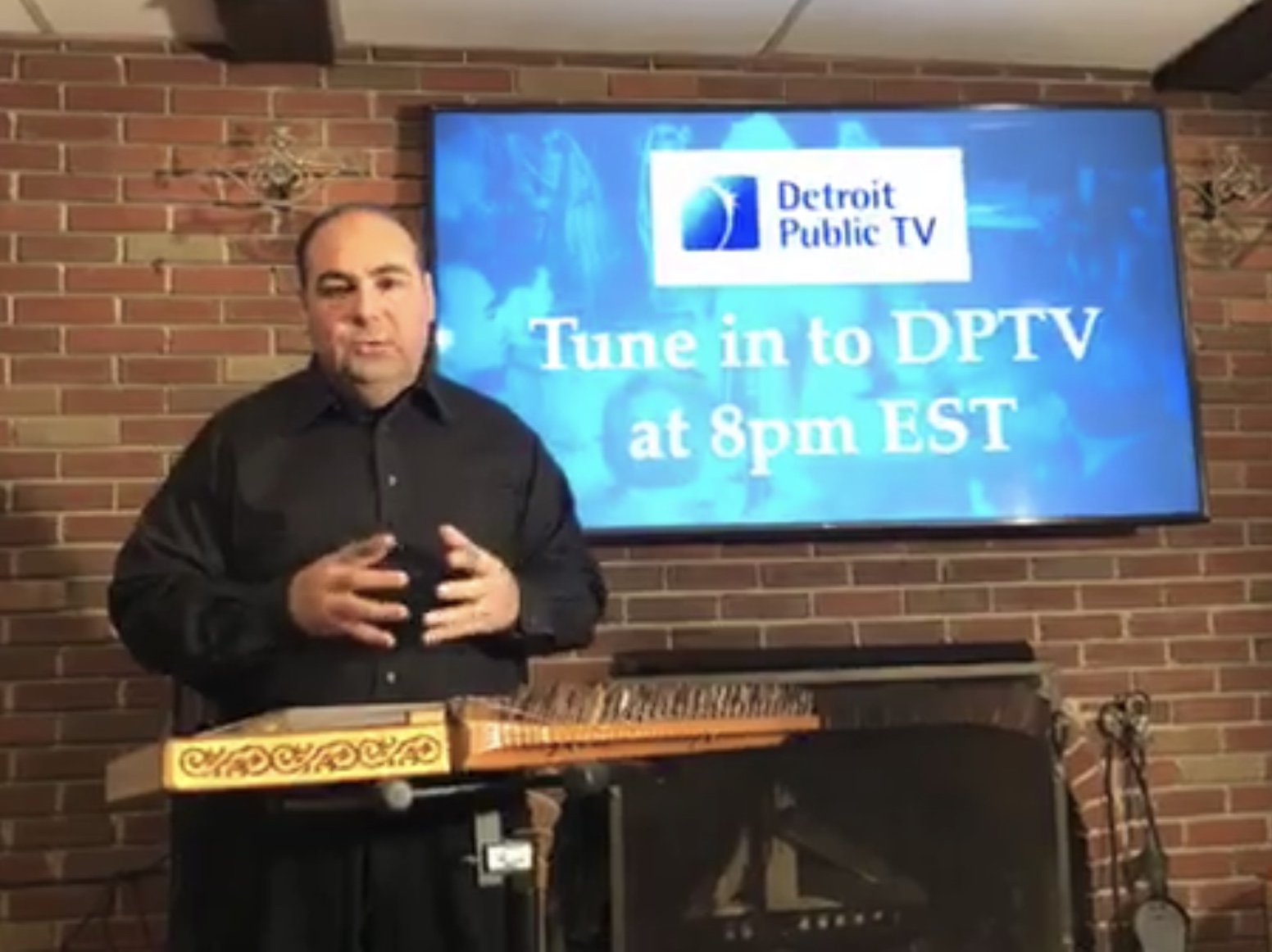
This past week, our local Public Broadcasting Station (DPTV) had organized their annual Armenian Heritage Night where they have aired different Armenian documentaries over the past twenty years. Each time, I have been involved with these events. Initially it started with short performances between pledge breaks and then in 2015 (during the 100th anniversary of the Armenian Genocide) it included the airing of my film documentary Guardians of Music. On Friday, March 20th, amid the pandemic, Armenian Heritage Night was scheduled with live interviews and performances. The plan drastically changed the day before for the safety of all involved. The live interviews were replaced with taped segments and the live performances were also excluded from the evening. However, within hours of the airing of Armenian Heritage Night, a few of us improvised and in partnership with DPTV, I added a Facebook Live performance and promo prior to the airing of the documentaries. This was cross promoted by the station.
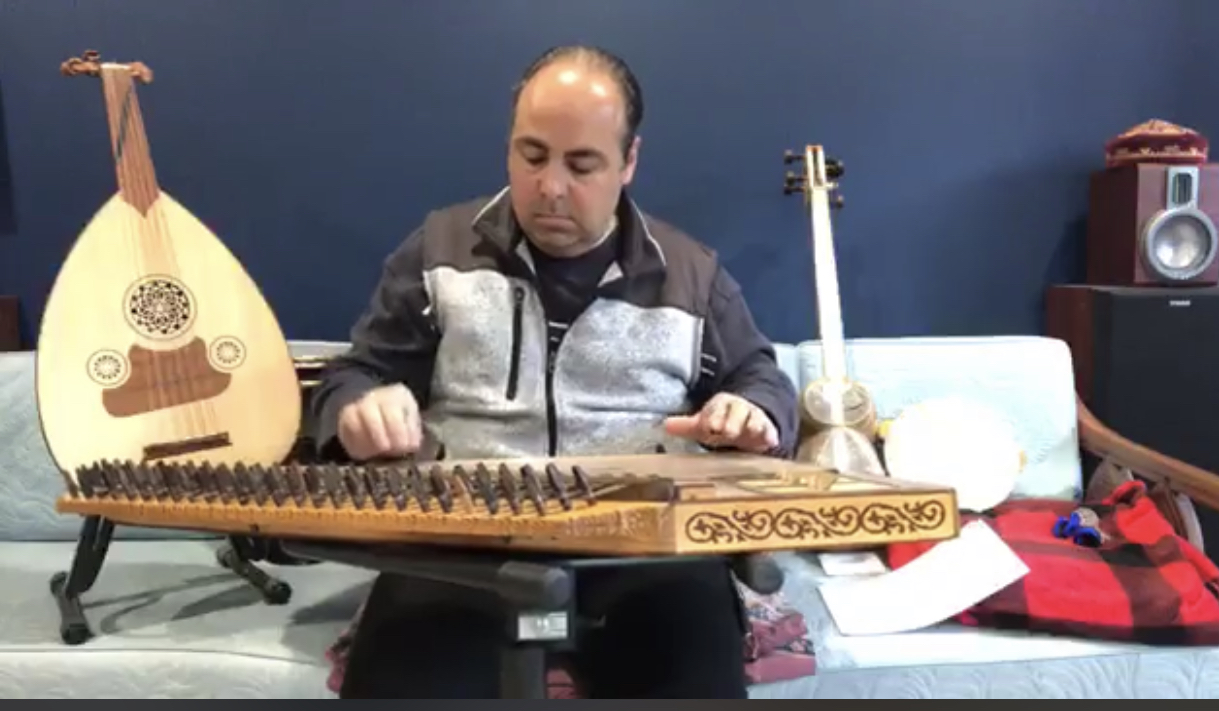
A screenshot from my home-based performance. To view the performance: https://bit.ly/33BZ5ME
It was a mad panic on my end to get everything set up and to have a makeshift studio in my house ready to go live at 7pm. Running around and trying to get the lighting right, sending out an email blast to my subscribers, a slide presentation and dressing up (for the camera!) in my own house to play music and talk to a camera was a unique moment in my musical career. All the while I was running around I kept thinking “I cant believe I am doing this”. Of course, the expected technical issues right before we were supposed to go live didn’t help and my wife ended up holding up my iPhone and filming it instead from my laptop setup.
I played music, promoted the event and briefly talked about my experiences with Armenian music. In my head I was still amazed this was happening and couldn’t help but think how this is our new norm for awhile. In the end, the event went well and so did Armenian Heritage Night at the station.
Our new norm will rapidly change and for those that make their livelihood as full time artists, I applaud your resiliency and can only hope that this will soon pass and you will be able to get back to promoting your art in front of people.
We are currently living in unprecedented times as the world deals with the COVID-19 pandemic. As it gradually makes its way throughout the United States, it became a reality for Michiganders this past week. Government emergency mandates, school closing, and small businesses becoming affected by patrons being told to social distance themselves.
COVID-19 affects all of our lives and daily routines have been disrupted and how we operate both for work and home have been altered. As more Michigan tests results become public, I feel everyone is trying to do the best possible in managing the situation.
Every industry will be effected by this crisis, some more than others. The performing arts world is such an industry that will now need to learn how to pivot in order to stay alive.
Musicians that make their primary livelihood performing in public are met with cancelling gigs or venues shutting down for the foreseeable future. This type of lost revenue for a musician is difficult to replace as securing these gigs happen months ahead of time.
College and university music students that have been preparing for onsite recitals as part of their final exams are in a state of uncertainty.
Community theatre productions have been cancelled.
Public art gallery showings are being shut down or delayed. The Detroit Institute of Arts has closed during this crisis.
However, even with this crisis right in front of us, I am witnessing the resilience of the arts community, especially in my home state of Michigan. These artists are using their natural creativity that they use to present their art in adapting to this crisis. I have witnessed some great online approaches for performing artisans in Michigan.
Screenshot from a recent online concert that included musician Michael Shimmin
Musicians are hosting free/donation-based live concerts online. It may not increase their revenue, but it does keep musicians relevant and provides great entertainment for those on lock down in their homes. This is especially useful for many of the senior care facilities that are accustomed to live musical entertainment and are not shut off from any visitors. Michigan percussionist Michael Shimmin recently performed a concert on Facebook. “It was a success. Due to PayPal and Venmo donations from people watching, the musicians actually made some money. And we treated it like a real concert. We probably played for 90 minutes” said Shimmin. We should encourage more of this type of activity.
I am noticing many musicians are also moving to an online platform for teaching their students. Certainly this is an area that can be an increased revenue source for any artist that teaches others.
Increased email communications will be important for artists. I am getting more notifications from artists that include more ramped-up e-commerce efforts. Encourage friends and family to support the artists through purchasing of artwork online. Musicians are often found online at Spotify, iTunes and Apple Music. Consider listening to their music online as musicians (albeit very small) do receive royalties for both downloading and listening.
The bottom line is that as we adhere to guidelines we are given from local governments, and health divisions as we maneuver through new waters with this crisis, lets also keep in mind all of the professions and businesses adversely and innocently affected by COVID-19.
I am a frequent user of the online music app, Spotify, which has allowed me the ability to experience a broad range of musical artists and genres. As a matter of fact, I have discovered more artists using this app than any other online musical source. Recently, as I was searching for some specific Armenian compositions, I came upon an artist and her recordings that I have since enjoyed listening to several times and would like to share with you.
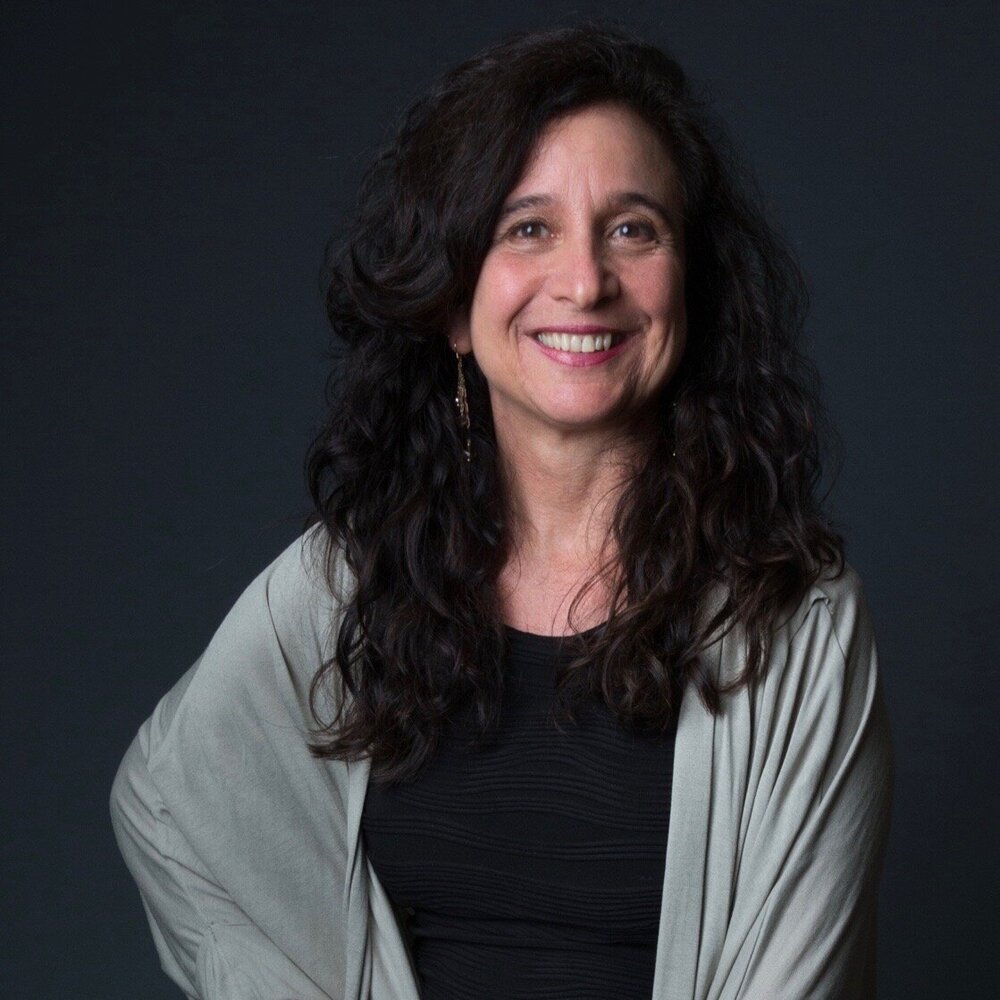
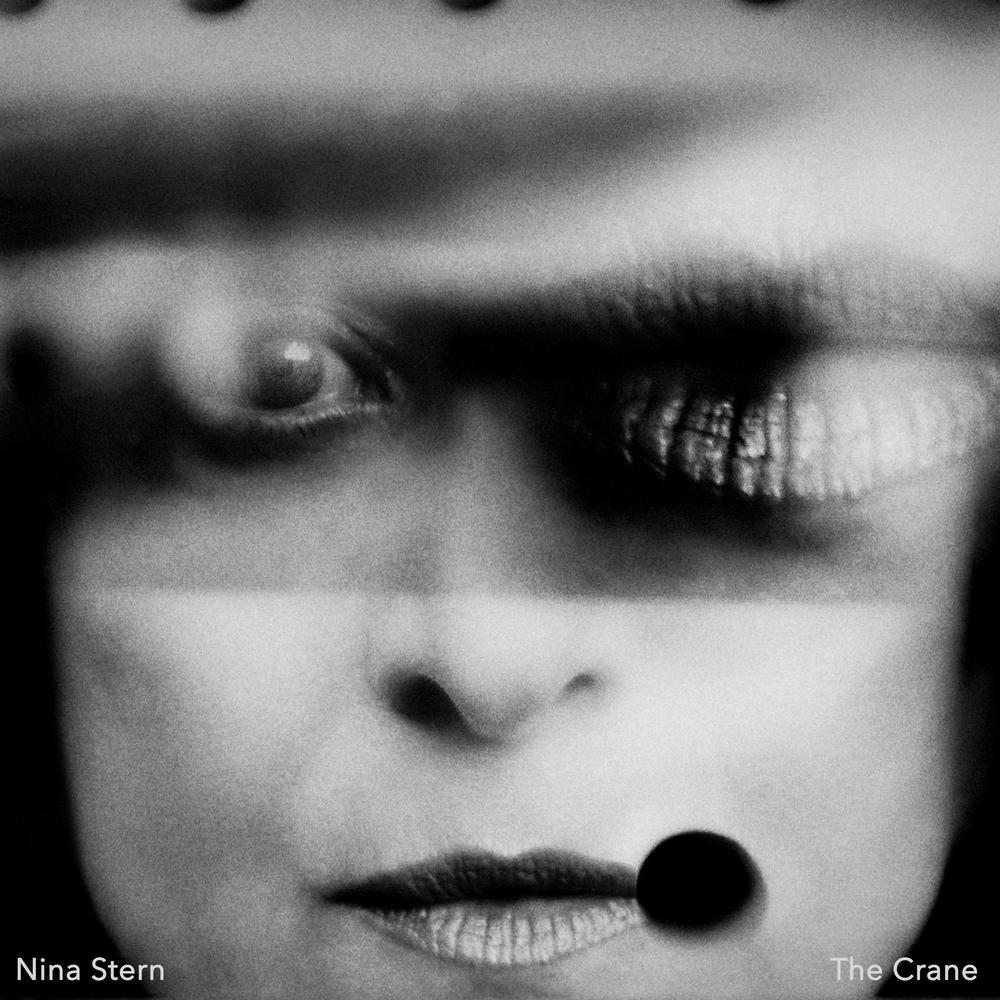
The Crane is a collection of Armenian folks songs which are beautifully arranged by musician Nina Stern. Stern is a classically trained recorder and clarinetist residing in New York and her work has predominantly been classical music and specifically Early music.
Stern started performing on the recorder like one might think, in elementary school along with other children and immediately fell in love with the instrument. She even took the recorder to her piano lessons so that she could play alongside the piano. Finally her piano teacher told her parents that she should focus on the recorder as it was clear of her passion for this instrument. The passion grew and as she got older she decided that she wanted to have a career in playing music. She even received a degree in performing Early/Medieval music.
Classically trained in Western music, eventually this love of Early music opened the door for Stern to become interested in other forms of roots music or world music. Doing so, she was able to learn about other places from around the globe. Her research eventually led her to find Armenian and Middle Eastern music.
“I fell in love with the music. It has aspects that I have played, many similarities. There is a simplicity to it that at the same time is complex. I am blown away by the melodies created in Armenian music with so few notes” said Stern.
Tamer Pinarbasi on kanun
The Crane has many wonderful Armenian folk songs. The introductory track, Aparani Bar is masterly done by kanunist Tamer Pinarbasi performing a picture-perfect taksim with the ensembles rhythmic backing. Master Armenian oudist, Ara Dinkjian is featured on this album and you can hear his smooth and thoughtful performance throughout the album. His lead into Bardezum is superb along with his rendition of Groong (The Crane) the title song for this album.
Many of Stern’s song selections definitely have an undertone of influence by Ara’s father, singer Onnik Dinkjian, even though this is an instrumental recording. True collaboration occurred between Stern and Dinkjian on choosing songs that ultimately led to this album.
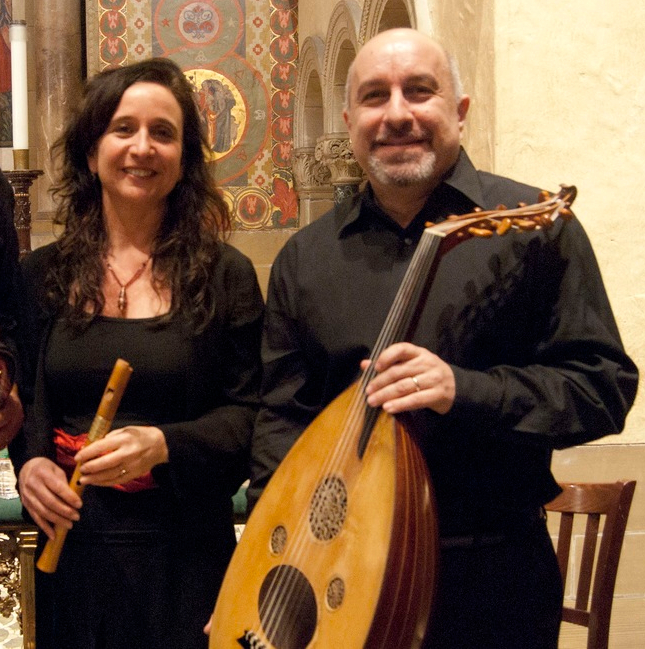
Ara Dinkjian on oud
“Nina comes from a western classical world, and although I graduated from a western classical conservatory, that is certainly not my forte. I always want to expand my musical experience and knowledge, so I welcome the opportunity to work with artists such as Nina Stern, who is a world-renown recorder player and educator” said Dinkjian.
Both musicians share a mutual admiration and respect for each other’s talents and abilities. “Ara is one of the most generous musicians I have ever worked with. He is happy to share the knowledge and music.” said Stern.
Nina and Ara
The Crane is not the only time she has recorded Armenian music. ” I fell in love with Armenian music ten years ago. Since then I have recorded two or three Armenian songs and dances on my albums” written by Stern on the back credits of The Crane CD.
The Crane features Nina on recorders and chalumeau (a single-reed folk woodwind instrument of the late baroque and early classical era), Ara Dinkjian on oud, Tamer Pinarbasi on kanun, Shane Shanahan on percussion, and Hans Bilger on bass.
The Crane is a great recording and I encourage you to listen to it. Nina, knowing the positive response she received, is potentially interested in working on another volume of Armenian music. I am looking forward to that release.
As a way to give back to the community and to share her knowledge of music, Stern formed S’Cool Sounds close to twenty years ago. This nonprofit organization allows the sharing of music-making to children throughout New York City. This is still a big part of her life and she loves the ability to share music in either the USA or overseas.
(August, 2019) Performed in Holland, Michigan for the first ever international folk festival they held. Great crowd and beautiful city!
As a general rule, I have never really been fond of these year end type of blog postings as they always seem to be self serving and dare I say – boring. As I grow older (I hit the big ’50’ this year!) my writings on this website have moved towards a focus on other musicians and musical stories as supposed to my own achievements. The articles have been purposeful and not just random thoughts. In the past year I wrote 15 articles and all on a variety of subjects I wanted to cover for readership. These stories have been enjoyable to write and it has allowed me to flex some of my journalistic background. (BA in Journalism over 25 years ago!)
As I reflect on this past year, here are some of the stories I was really happy to have put together:
I would like to give a shout to the Armenian Weekly for allowing me to submit two articles this past year focusing on musicians that had pending album releases.
(October, 2019) Doug Shimmin and Mike Shimmin and I got together to play some music in Ann Arbor, MI. I miss playing with them!
Back to the recap of 2019 that I initially said doesn’t interest me (ha!). Even though that is true, I do want to thank ‘the year’ for all that it has afforded me both personally and professionally. So many great things have happened in my life this year that I am very thankful about and do not take them for granted. As a musician, I have had the opportunity to perform at some great venues and for great events..but most importantly, with some great musicians. Any performance where I can educate the audience about the music is a great win in my book. now, I am not professing to be a musical scholar nor do I go into deep history of Armenian music at my performances but I do share my experience and the audience has always reacted favorably.
As many that know me, I enjoy playing with an ensemble. Whether its a trio or larger, I feel that the added performers only enhances the experience for the listener as well as help drive me to perform better music. Sure…I could do solo music performances, and sometimes I do, but whenever you can play with a group of great musicians, it can be magical.
(October, 2019) Performed in Chicago with friends Mark Gavoor, Leon Janikian, John Paklaian and my new friend, duduk master, Mher Mnatsakanian.
As I prepare for 2020, those great gigs will hopefully continue into the year. You will see an increase in my social media activity but you may not see an increase in my blog postings. As I mentioned, I am going for quality, not quantity and generally it can take some time to compose some of the stories I have posted.
Finally, thank you to all that read my posts, follow me on Facebook,Twitter, and Instagram. I sincerely wish all of you a very happy and healthy new year for 2020. Here are some fun words to live by – don’t sweat the petty stuff and dont pet the sweaty stuff! 🙂
Traditional Armenian village music has traveled hundreds of years and has faced major hurdles in order to survive and tell an important story about the Armenian people. So much has been lost due to the horrors of the Armenian Genocide, but we are fortunate to have the music that survived. Now we need to nurture and protect its history.
One of today’s leading musicians of this style of music is Mal Barsamian. He has continued to perform and preserve traditional and village sounds of Armenian music for the last 50 years. His latest instrumental album, The Exciting Sounds of the Mal Barsamian Band, is not only a tribute to the rich music he is trying to preserve, but also an homage to his musical mentors—he says, “…to the many musicians and band combinations that I have watched and had the pleasure of performing with.”
The genesis of this recording comes from the song Yarimo by famed 20th century Armenian composer Tatul Altoonian. Barsamian first recorded this song for a few fellow musicians to prepare for an upcoming concert. After hearing how the song came out, he decided to record more on a home recording unit, and the end result was this new album. This is a vibrant recording meant to get you to dance and enjoy some of the happier Armenian music that is still performed at gatherings and weddings throughout the diaspora. If you ever had a chance to hear Barsamian perform music in a live setting, this album emulates style and energy on-stage. He sets the tone of this album by including a faster version of Yarimo.
Another great example of his dexterity on these instrumentations is the song Laziko, performed in a 7/8 rhythm. Both Greek and Armenian variations of this dance are taken from the ancient lands of Laz, part of historic Turkey inhabited by Armenians, Greeks and other ethic minorities.
Most of Barsamian’s new album features the clarinet as the main lead, but on the Tamzara Medley he switches to alto saxophone for this 9/8 dance song. Not to be ignored is Mal’s percussion abilities. He is a solid drummer providing as much effort on the dumbegs as he does on the lead instruments. His style of playing drums is reminiscent of the late Armenian percussionist Bobby Sohigian from Massachusetts.
Barsamian’s prowess as a musician is highlighted with a Tunisian musical piece on an album that is mostly Armenian music. Itr al-Ghajar (Gypsy Perfume) is a modern song written by composer Anwar Ibrahim in a 4/4 syrto rhythm. “It was different and I liked the different accents that it displays within the piece,” said Barsamian. It’s definitely a great track that brings the oud to the forefront along with the alto saxophone.
Another song on the album is Koo Ghimetn Chim Kidi by troubadour composer Sayat Nova led by Barsamian on oud. His soulful feel on the instrument captures the essence of this folk song. He takes care in presenting this song as it was written. Ironically, the translation of the title means I’ll Never Know Your True Worth. One might say that this title is a fitting one given the great lengths traditional Armenian musicians have taken to preserve what has been sometimes referred to as a dying style of music. This album is yet proof that the music is alive and well.
As a third-generation musician, Barsamian was heavily influenced by his grandfather, father and great-uncle. In fact, his first paying gig was at the age of 10 with his father. Knowing that he wanted to pursue a career in the performing arts, he earned a bachelor’s and a master’s degree in classical guitar performance under Robert Paul Sullivan at the New England Conservatory of Music. Today, Barsamian performs around the country at concerts and festivals. When he isn’t performing, he teaches Middle Eastern music at the collegiate level, as well as give private lessons.
Whether it is the clarinet, oud, dumbeg, saxophone, guitar, violin and in recent years, bouzouki – Barsamian has left his mark on all of these instruments. Over the years, I have heard comments that any musician can play traditional Armenian and Middle Eastern music. Not only do I disagree with this concept, I would challenge those to find another artist capable of performing (at the highest musical level) these many instruments. This is a true definition of a virtuoso, which is evident on Barsamian’s new album.
In fact, the title of the album, “The Mal Barsamian Band” is a tongue and cheek reference to all of the roles he plays on each song without the help of any musicians. Having had the opportunity to hear and perform with Mal over the years, it is difficult for me to choose which instrument I enjoy the most when he plays as each one provides a great deal of enjoyment.
ALBUM TRACKS:
Yarimo
Barsamian 10/8 Medley
Hye Aghchig-Hay Nar
Kochari Halay
Laziko
Hicaz Ten Eight Medley
Kef Dance
Tamzara Medley
Kez Hamar
Itr Al-Ghajar (Anwar Ibrahim)
His Koo Ghimetn Chim Kidi (Sayat Nova)
Daldala
Pompourig
Ussak 10/8 Medley
Van Bar
The Exciting Sounds of the Mal Barsamian Band is available at CD Baby and Armenian Vendor.
You can also download this digital album from Spotify.
Other recordings of Mal Barsamian include:
The Mal Barsamian Ensemble, Vol. 1 and 2; Camp Haisatan Favorites; Farsarotul Favorites; The Tulip & The Sword; Armenian Melodies; Turbo Tabla: Arabic Music Re-Imagined; Mystical Veil; One Take; Homage: A Tribute to Armenian Musicians.
This article was originally published in the Armenian Weekly.
Armenians, worldwide, celebrate a significant birthday this year, for a man named Komitas Vartapet. Known throughout all Armenians and musicians alike, as well as composers, and historical scholars as the ‘Father of Armenian Music’. Following a concert of Komitas’ music in Paris, famed composer Claude Debussy declared that on the basis of a single song, Komitas should be regarded as a great composer. As Armenians, we celebrate his life for a multitude of reasons. As a composer, Komitas’ sacred liturgical music is still performed in most Armenian church services around the globe (see the below link of a complete divine liturgy). He was a collector of folk music, responsible for the collection and transcription of over 3,000 folk songs.
His birth name was Soghomon Soghomonyan and he was born on September 26, 1869 in Anatolia, Turkey, in the town of Koutina. In 1890, he was ordained Komitas, after an Armenian poet of the 7th century who composed sharakans (Armenian liturgical chant).
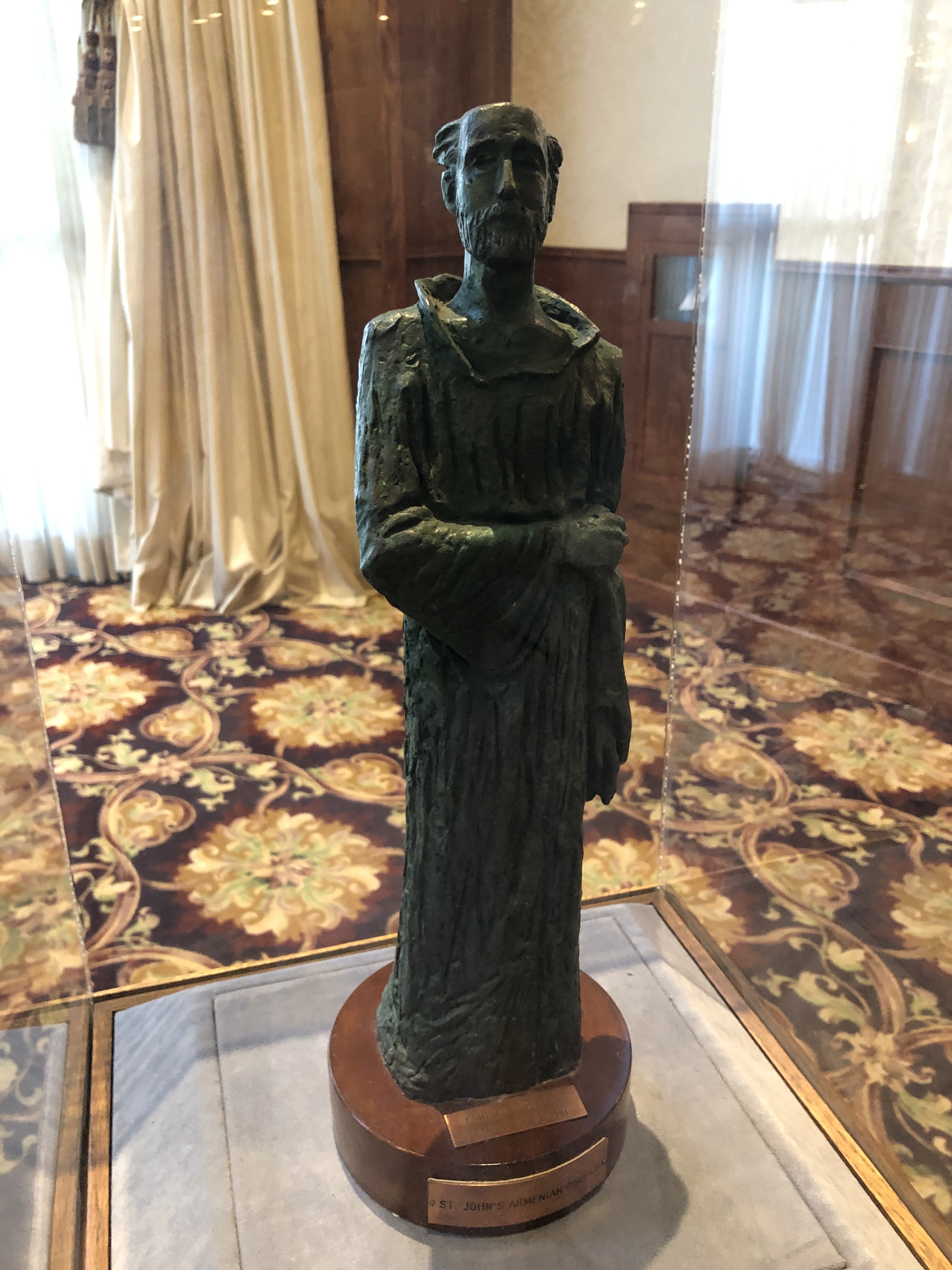
Statue of Komitas from St. John Armenian Church
During the Armenian Genocide of 1915, Komitas was part of the first groups of Armenians collected by the Turkish troops for extermination. His life was eventually spared and Komitas was eventually freed from prison. However, this freedom was short lived as the horrors of the Armenian Genocide haunted Komitas for the remaining years of his life and he succumbed to mental illness and passed away in 1923, in Paris.
Much has been written on Komitas over the years. Books and stories honor his memory and his compositions and the major contributions he made as an Armenian priest to Armenian music.
On October 20, 2019, the Detroit Armenian community paid tribute to Komitas with a program featuring music, dance and reflections on his life.
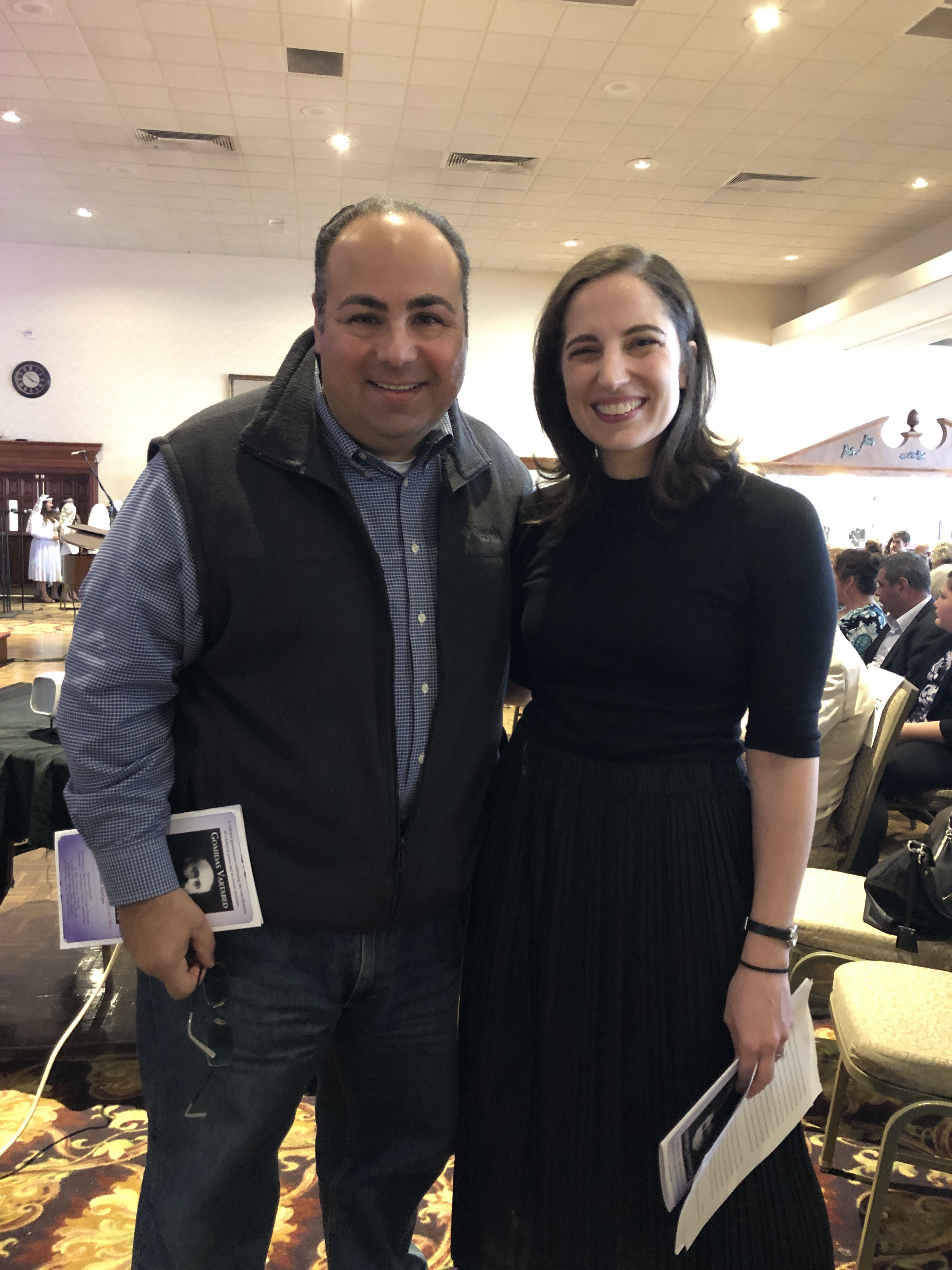
Ara with Dr. Sylvia Alajaji
Dr. Sylvia Alajaji, Associate Professor of Music, Department Chair of Music at Franklin & Marshall College and author of Music and the Armenian Diaspora: Searching for Home in Exile presented a keynote at this event.
She provided an inspiring retrospective on Komitas’ life. “He is as present as ever” said Alajaji, referring to the everlasting and continuation of Komitas’ music that is still performed today.
Alajaji continued to describe how Komitas’ music is responsible for connecting the diaspora to Armenia. “When we play his music, we make a statement. It shows who we are and that we are here”.
United Nations Educational, Scientific, and Cultural Organization (UNESCO) has listed Komitas’ birthday in their calendar of anniversaries.
Der Hrant Kevorkian, Pastor of St. Sarkis Armenian Apostolic Church recounted how he sang in a choir as a teenager called Komitas. He was the youngest in the group and sang only Komitas and Ganachian songs. “I learned a lot from that choir because we learned a lot history from the songs” said Kevorkian. “We learned how to pray, how mothers treated their children.”
The Detroit Hamazkayn Arax Dance ensemble along with the AGBU Alex & Marie Manoogian School Chorale performed folk songs comped by Komitas. A special offerings of Komitas’ Groong was performed by Sevana Mailian on oboe with Margaret Lafian accompanying her on piano.
Following a short intermission, a tribute to Komitas’ music an arrangement of songs performed by the nationally known Armenian a cappella group, Zulal.
A topic of continued discussion has always surrounded the “next generation” when it pertains to industry or when discussing the future of just about anything. Music is no stranger to this conversation as a matter of fact, it is imperative when discussing all forms of historical music. Folk music is the music of the people, handed down by generation to generation. This is the best way for this type of music to survive. We can document and record the music but it needs to be played in order for it to sustain for years to come.
Armenian folk music has been in jeopardy of disappearing for several years. Music that was performed pre-Armenian Genocide and traveled with the survivors, this style of music has a questionable future given that the generation that listened and danced to this style are getting older and passing away. However, it is my opinion that the music has a chance of survival if you have a few important (this shouldn’t come as any great revelation) components in place – musicians that love the music and perform it actively and an audience that wants to hear. Out of these components, I feel we will always have an audience that will appreciate the music. It may be a different audience, but I can tell you that when I perform music to a non-ethnic, non-Armenian crowd – they are appreciative and curious of the music. This audience vary in age. Our bigger issue will involve the musicians preserving the music. Often I am asked “Who else is playing this music?” or “Who is teaching the next generation?” The good news is there are teachers out there that are helping make this music survive and have given their time to teach the music. Armenian musicians such as Ara Dinkjian and Mal Barsamian are just two artists that actively teach students Armenian and Middle Eastern music. There are others out there and I am sure many that I am unaware of that are teaching the next generation this form of music.
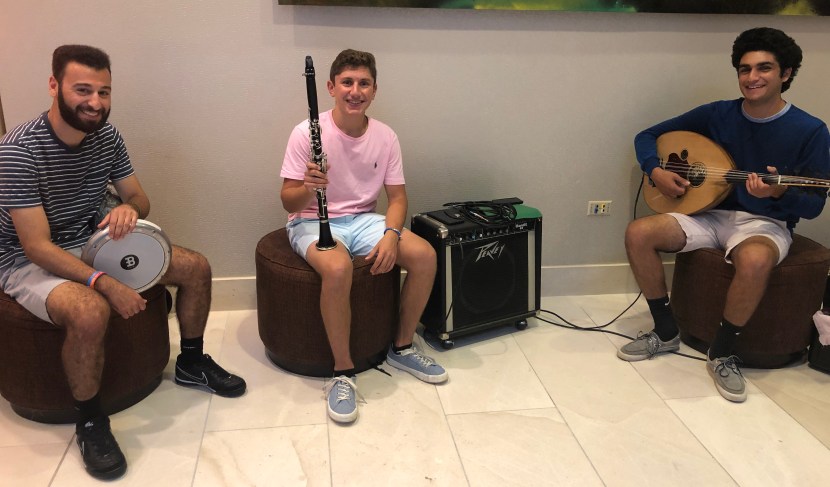
Alek Surenian (dumbeg), Michael Kamalian (clarinet) and Datev Gevorkian (oud)
Over this past Labor Day weekend, I witnessed (joyfully) a small group of young Armenian men that want to play music and be heard. So they set up ( a few) an impromptu “jam” session in the hotel lobby. One amplifier to share between the clarinet and oud and sitting off the side by a wall, playing music. No signs up, no loud sound equipment, dressed casually for the purpose of doing what they enjoy and hoping they can infect others with their passion.
These musicians were Datev Gevorkian from Massachusetts (oud), Michael Kamalian from Wisconsin (clarinet) and Alek Surenian from Illinois (dumbeg). These young Armenians are indicative of the next generation of musicians that want to preserve traditional Armenian and Middle Eastern music and love playing it for anyone that is interested in listening. These musicians should be encouraged to continue our traditions.
So in the spirit of helping promote the next generation of musicians, I wanted to shed a little light on them and allow their voices to be heard as they describe their impressions and importance of the music.
Michael Kamalian: “Growing up watching him (his father, Vahan Kamalian) play oud and listening to his favorite Armenian musicians, I fell in love with the sound of our music. I picked up the dumbeg at four years old and as I got older, I realized that by playing our rich and soulful music, I can keep the Armenian heritage alive”.
Datev Gevorkian: “It is important for me to play this music In order to continue on the culture and eventually pass it down to the next generation. It is also without a doubt very enjoyable”.
Alek Surenian: “Playing Armenian music is important because it allows people to connect. Music is a universal language and can be understood across a wide range of people. I knew from an early age I could play Dumbeg, and it didn’t occur to me until I was a teenager that creating music is a special skill which I shouldn’t take for granted”.
Recently on Facebook, someone posted the asked the question to readers to mention the name of a Middle Eastern musician ‘gone but not forgotten’. As Facebook inquiries go, this was actually interesting to see all the names generated in this long list. Names such as Udi Hrant Kenkulian, Chick Ganimian, George Mgrdichigan and others seem to dominate the list. Great musicians indeed and will always be remembered for their talents and contributions to music. This laundry list of names led me to think about two other musicians that didn’t seem to dominate the minds of the readers, making me wonder why they are sometimes overlooked. You dont read much about their past anymore, but their discography is alive and readily available online.
Mike & Buddy in 1952
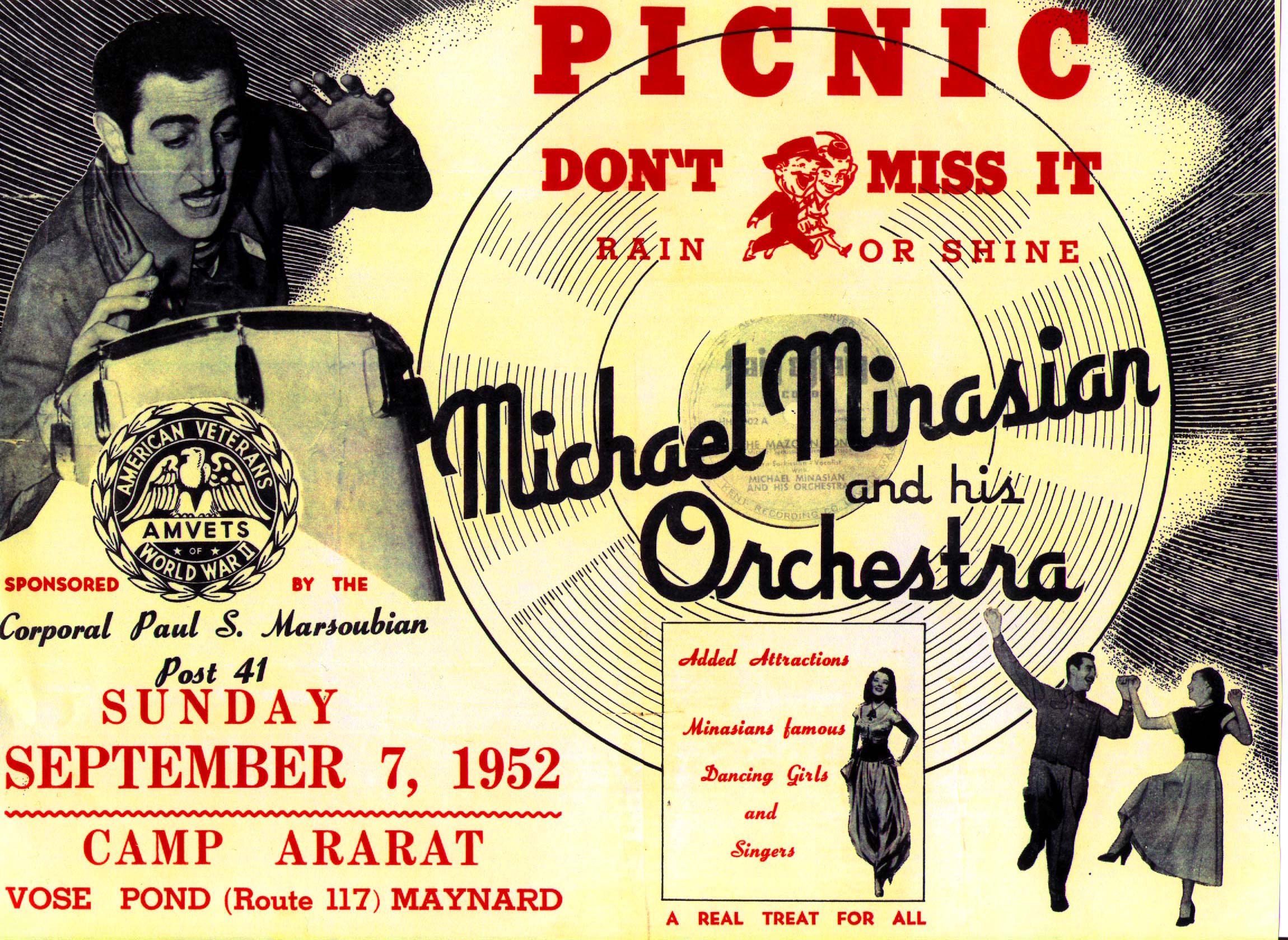
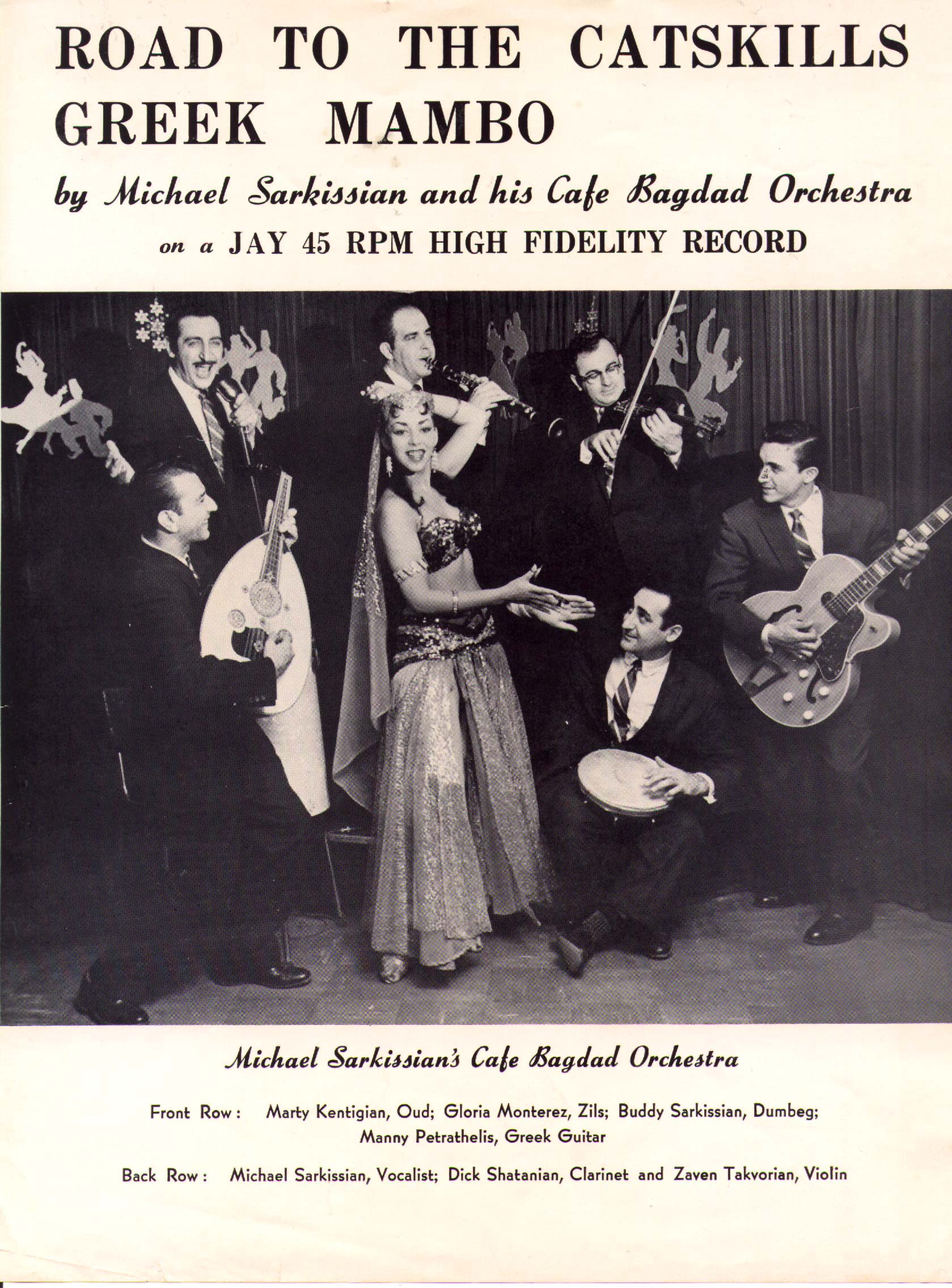
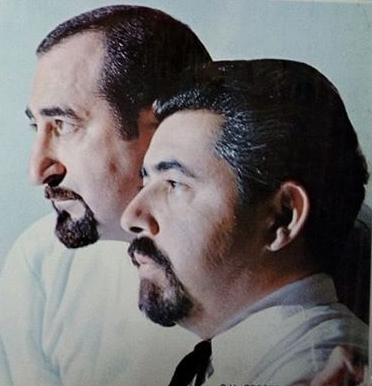
Mike and Buddy Sarkisian were icons in the Armenian and Middle Eastern music world from the early 1950s through the mid-1990s. They extensively recorded albums and performed throughout the country and abroad.
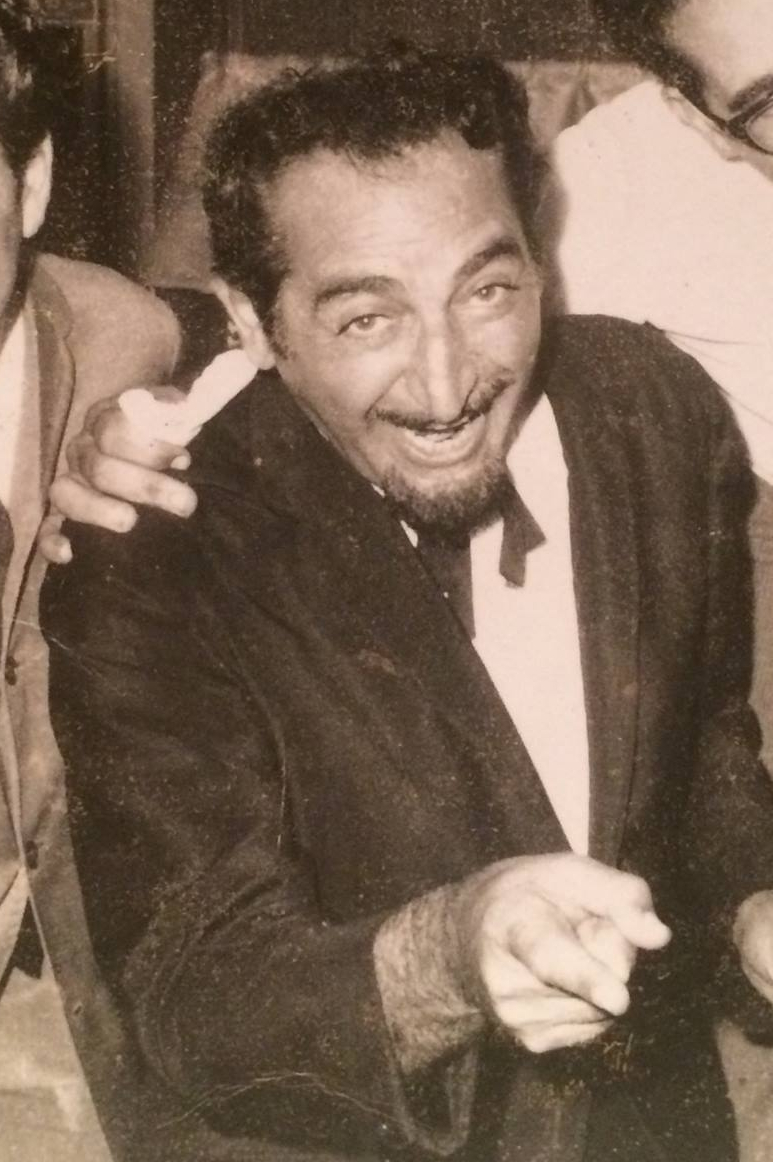
Mike, the older of the two brothers, was an entertainer and singer that managed different nightclubs in the New England (northeast corner of the USA) area featuring some of the most iconic musicians of Middle Eastern music of that era that included Udi Hrant and Marko Melkon. He loved an audience. As Armenian musician and professor Leon Janikian once wrote about Mike “…his on stage persona reveals very little of the man”. He was a very talented man and great visual artist as well. Many years ago, Mike sent me some music and on the outside of the envelope he hand drew a beautiful picture (in multiple colors) of the sun setting behind Mt. Ararat. I still have that envelope to this day.
Mike in the mid-1960s.
Mike was born in 1921 in Lowell, Massachusetts. He was described by the Boston Globe in his obituary as “A slim man with slicked-back hair and a pencil-thin mustache”. He first learned the traditional Armenian folks from his mother, a survivor of the Armenian Genocide. As a matter of fact, Mike was known for his rendition of “Gamavor Zinvor“, which is a folk song honoring Armenian volunteers who fought under the French against Turkish forces during World War I.
From the 1930-1940s, Mike was a hair stylist until enlisted into the Army during World War II. He was an aerial photographer until he was transferred to the Air Force Band and became a drummer. He even auditioned to be part of Gene Krupa’s band. He passed the audition and went on to perform backup for Bob Hope, Jerry Colonna, and other entertainers on USO tours.
Kef Time Band (left: Jack, Hachig, Richard and Buddy)
Buddy’s on stage persona was a bit different from his older brother. He didn’t sing but as a percussionist – you knew he was on stage. He loved playing music and it showed all the time. He was responsible for assembling together the iconic Kef Time Band that performed in Las Vegas for several years which would go on to become one of the most popular kef (party) bands to perform at Armenian functions throughout the country. The personnel of the band changed from time to time, but the well known combination was Richard Hagopian, Hachig Kazarian, Jack Chalikian and Manny Petro. “Thru a mutual friend, Buddy called and asked if he could come and possibly talk about hiring me in his Las Vegas show. I said yes. He came and after a short visit, I decided to take the job. It was only for 8 weeks, so I figured it was no big deal, and I could return home. After the first 8 weeks, our contract was extended for 8 more weeks. The original Cleopatra Revue broke a record on the strip for going 13 straight months without a break. No other show on the Vegas strip had done that” said oudist Richard Hagopian.
Buddy, Mike and Dick Shatanian
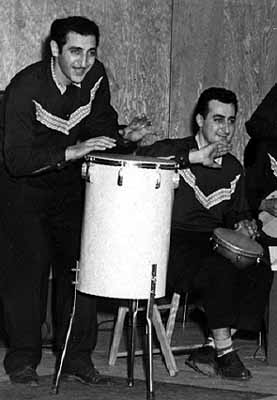
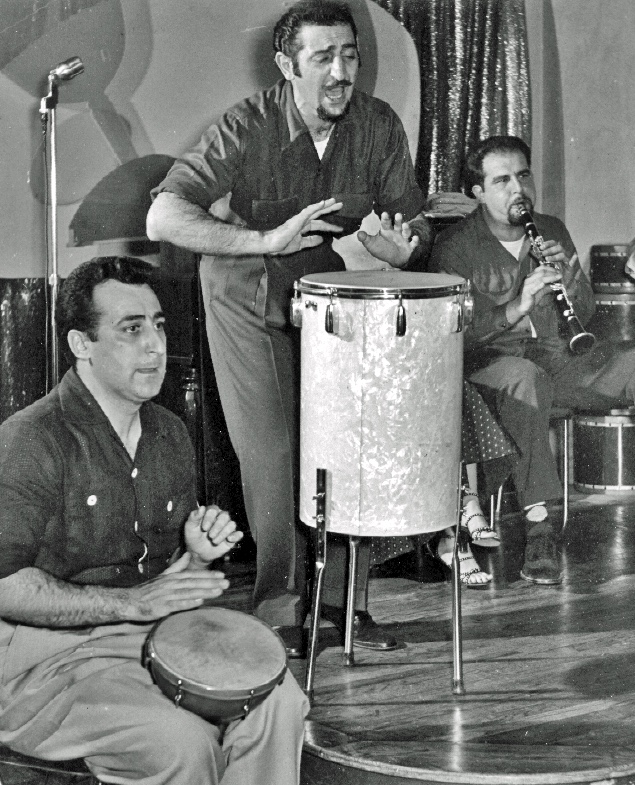
Buddy’s set up was usually alway the same when performing later in life – dumbeg between his legs, a small bongo set in front of him and a conga style drum to his side. His drum set up eventually became his trademark on stage.
Buddy was born in 1925 in Lowell, Massachusetts. His musical career started in 1941 when he was playing a drum set with his brother Mike in the Airforce at the beginning of World War II. A few years later his started playing dumbek with a variety of Armenian musicians. In 1950, started to play the nightclub circuit in the New England area including Flamingo, Morocco, and Middle Eastern Bombshell.
In 1953, Buddy recorded his first album with the famous Arabic oud player, Mohammed El Bakkar along with several 78rpm recordings. A year later Buddy and Mike would open their own nightclub called the Tamba Club. One of the most popular Middle Eastern/belly dance nightclubs in Massachusetts, packed every weekend.
Mike and Buddy headlined in several hotels and casinos in the 1960s, for many years they were featured at the International Hotel in Las Vegas. They recorded several LP albums and performed with a wide array of musicians throughout their long career. Both brothers retired from playing music full time and had various jobs, always keeping music in the forefront as it was always in their blood.
Buddy Sarkissian and His Mecca Four in the 1960s.
They loved the music, they loved the fun.
As mentioned earlier, it seems we don’t hear about them as much as other performers that are no longer with us. This should not diminish their value and contribution they made to the music world. To me, both brothers were the definition of “kef” and embodied what we feel when we hear and play this music. I felt that they were inclusive musicians, wanting as many people to be part of the fun they were having – whether or not you were a musician. Sure, if you were a musician, they treated you like a brother. They embraced musicians and encouraged the younger generations. I know this first hands, as I was one of them.
Buddy with Richard Hagopian in a photo to promote the Kef Time Band.
Mike and Buddy embraced me as a musician when I was first starting to play and as frequent the Kef Time Hartford music weekend in Connecticut during the early 1990s. They would let me come on stage with them and encouraged me to enjoy the music and play with them, whether it was drum or tambourine. When I started to play kanun professionally, I had the opportunity to perform at Kef Time. Both brothers continued their encouragements. When the gig was over, both would say “come up to our suite, we will continue to have some kef!” These parties were always interesting as to who would drop by and would make for fun stories for years to follow. Sometimes I felt like the little kid getting to hang out with my parents friends at a house party.
Mike and Buddy, their memory and music lives on.
Special thanks to Mal Barsamian, Richard Hagopian, Leon Janikian, Joe Kouyoumjian, and Meletios Pouluopolos for contributing to this story.
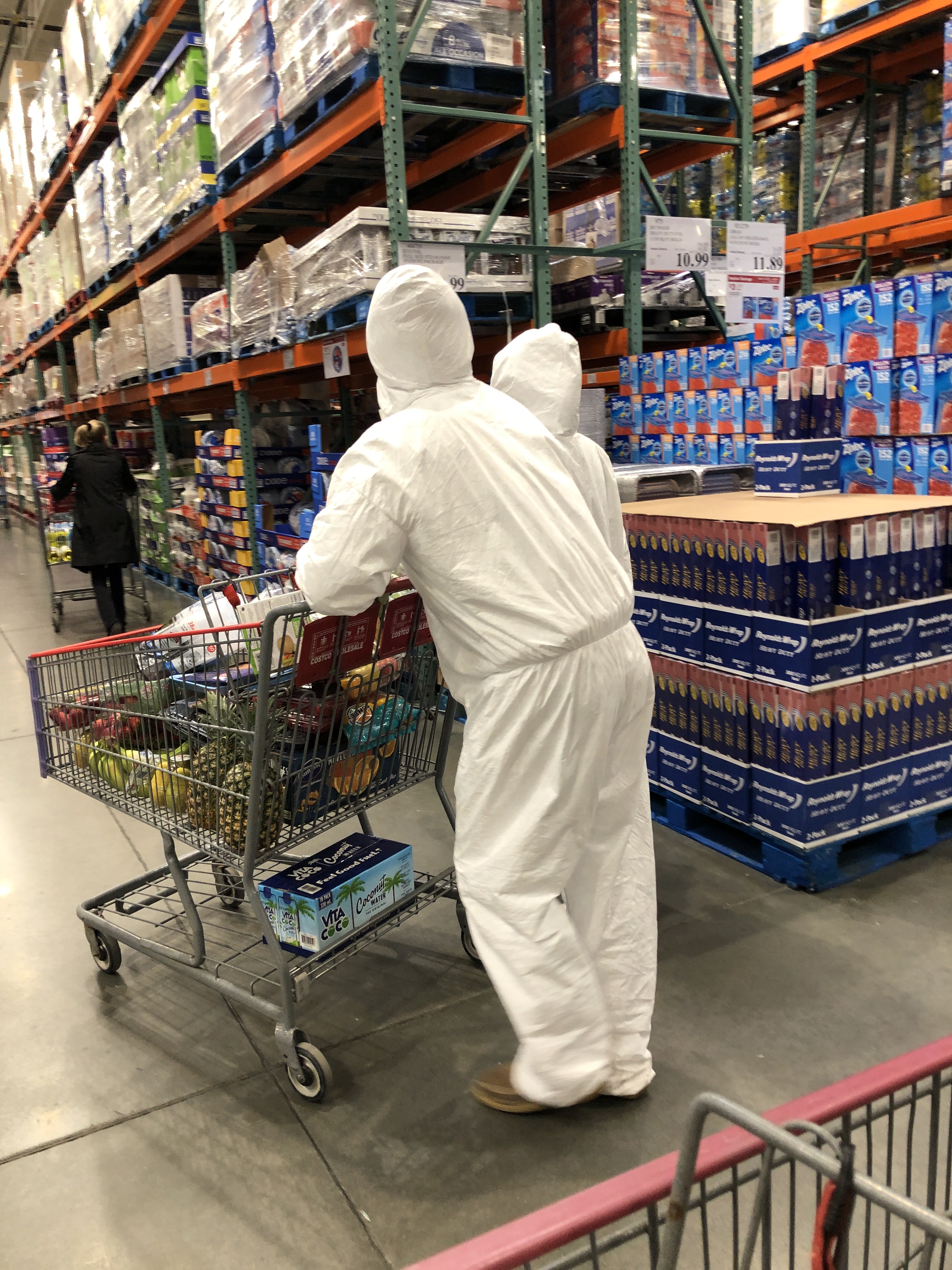 Each of us are probably already on overload when it comes to listening to the news detailing the consistent updates and the severity of COVID-19. Each day when I wake, I cant help but think “I wonder how bad it will get today”. In a matter of one week, many of our lives in the US have turned upside down with working from home (for those of us that have that option) and watching business after business closing down to help #flattenthecurve. I am only venturing out to obtain the essentials and I have going into several grocery stores just to find the basics and I am met with empty shelves, social distancing markers on the ground and even individuals in full HazMat outfits. Each day brings me to a point of limiting those trips. It’s real and scary.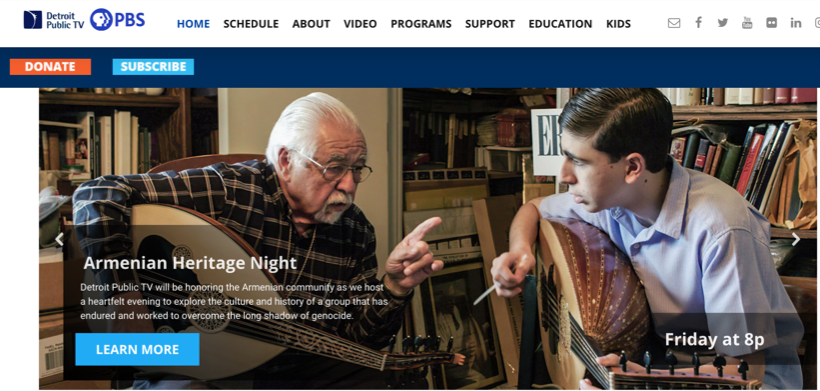
 COVID-19 affects all of our lives and daily routines have been disrupted and how we operate both for work and home have been altered. As more Michigan tests results become public, I feel everyone is trying to do the best possible in managing the situation.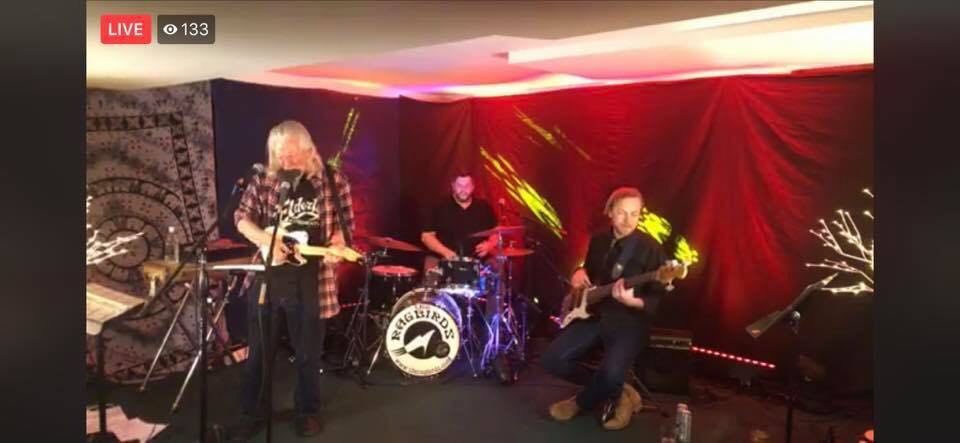
 Stern started performing on the recorder like one might think, in elementary school along with other children and immediately fell in love with the instrument. She even took the recorder to her piano lessons so that she could play alongside the piano. Finally her piano teacher told her parents that she should focus on the recorder as it was clear of her passion for this instrument. The passion grew and as she got older she decided that she wanted to have a career in playing music. She even received a degree in performing Early/Medieval music.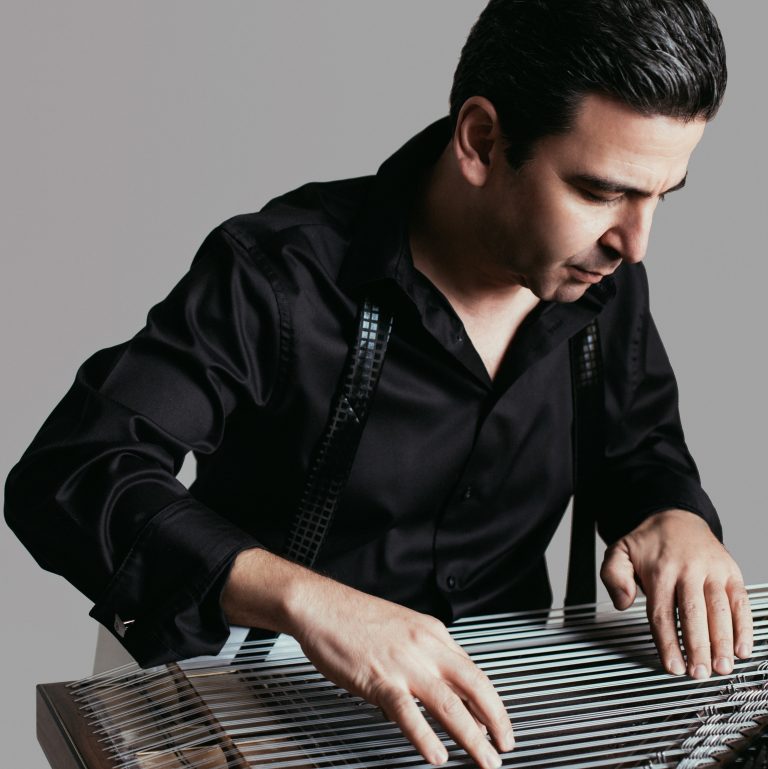

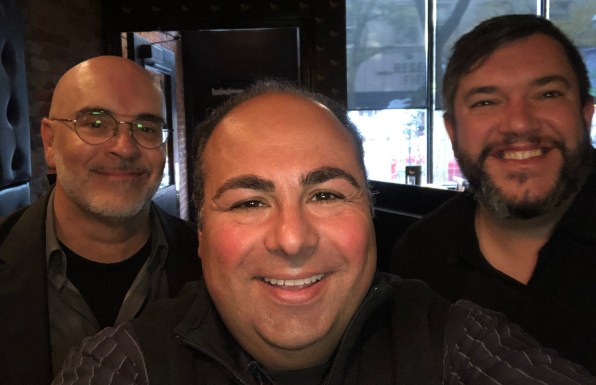
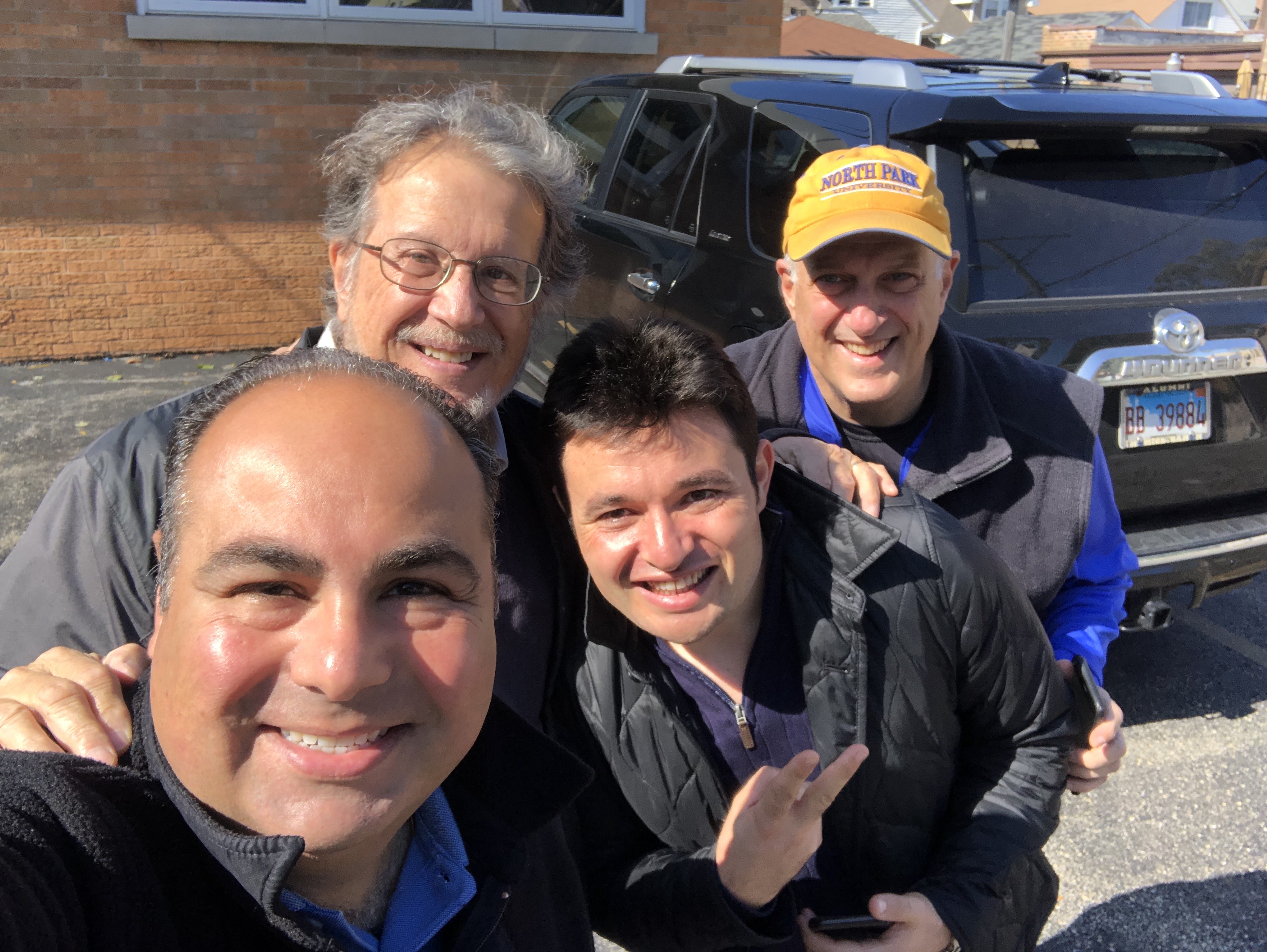
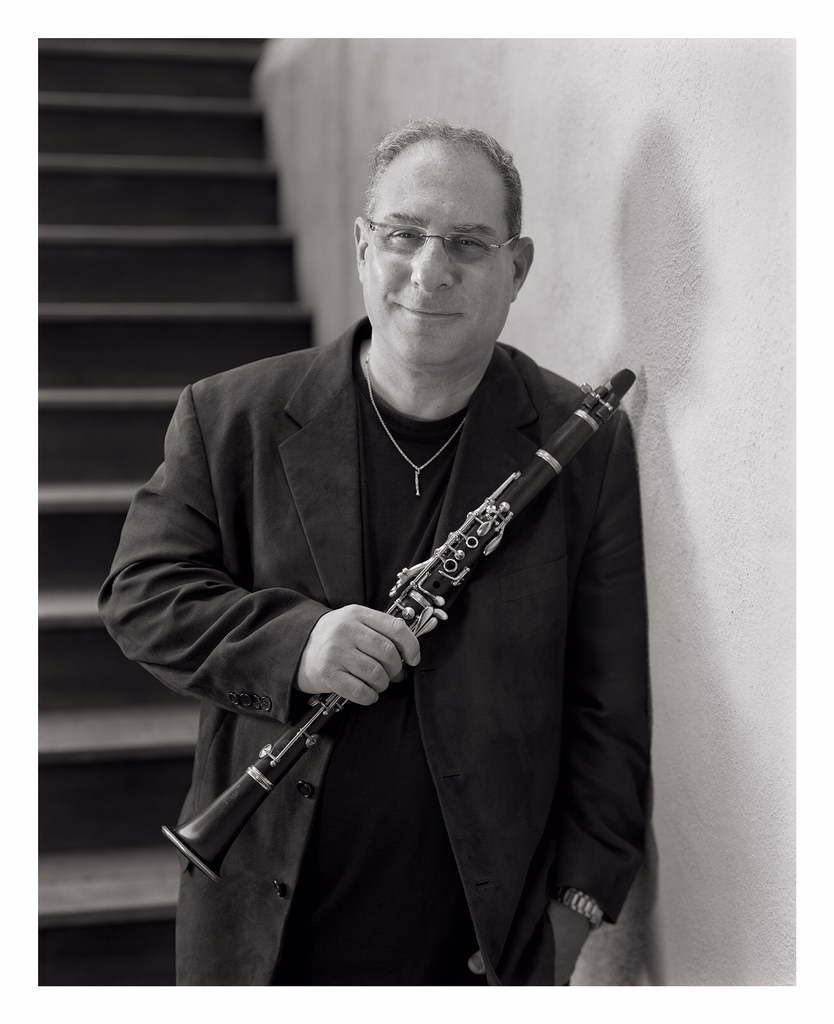 One of today’s leading musicians of this style of music is Mal Barsamian. He has continued to perform and preserve traditional and village sounds of Armenian music for the last 50 years. His latest instrumental album, The Exciting Sounds of the Mal Barsamian Band, is not only a tribute to the rich music he is trying to preserve, but also an homage to his musical mentors—he says, “…to the many musicians and band combinations that I have watched and had the pleasure of performing with.”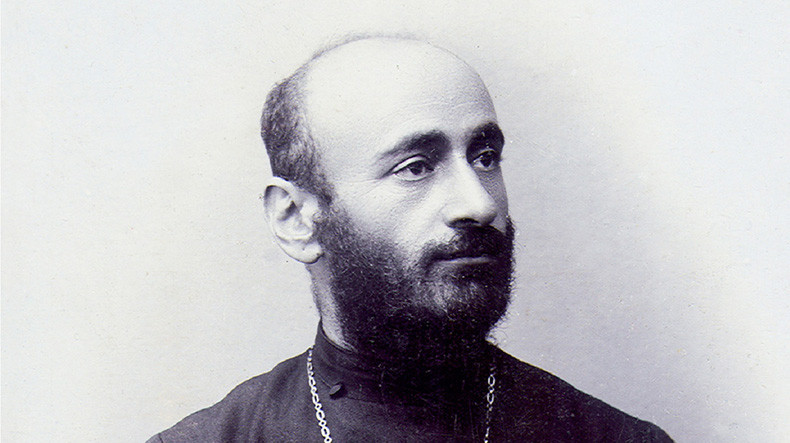
 From the 1930-1940s, Mike was a hair stylist until enlisted into the Army during World War II. He was an aerial photographer until he was transferred to the Air Force Band and became a drummer. He even auditioned to be part of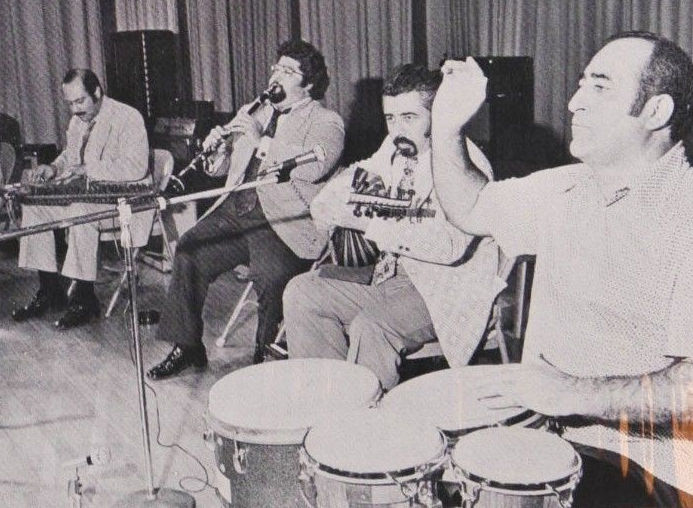
 In 1953, Buddy recorded his first album with the famous Arabic oud player, Mohammed El Bakkar along with several 78rpm recordings. A year later Buddy and Mike would open their own nightclub called the Tamba Club. One of the most popular Middle Eastern/belly dance nightclubs in Massachusetts, packed every weekend.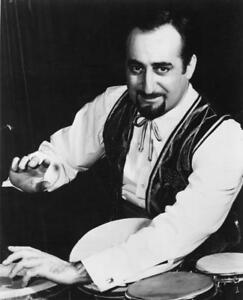


 HYE Times