 In the Armenian world, art has always been more than creative expression. It has been testimony. Survival. A thread tying one generation to the next. And in the last two years—following the mass displacement from Artsakh in 2023 and the global unease that has followed—Armenian artists have once again stepped into that ancient role: carriers of memory, witnesses to trauma, and architects of cultural continuity.
Across film, music, visual art, and literature, a wave of Armenian creators is responding to displacement with new work that is urgent, vulnerable, and deeply rooted in our shared story. These artists are doing what our ancestors did in their own moments of upheaval: turning loss into language, exile into vision, and silence into sound.
Below is a look at some of the artists shaping this moment, and why their work matters now more than ever.
The Ever-Present Shadow of Artsakh: Sareen Hairabedian
In a January 2025 interview, filmmaker Sareen Hairabedian reflected on why she felt compelled to document life in Artsakh before its fall. Her words capture something that nearly every Armenian has felt in the past two years:
“I wanted to draw attention to Artsakh… even if there was no active war, there was the cloud of war.”
That cloud didn’t just hang over Artsakh—it hangs over all of us.
Hairabedian’s most recent work explores the psychological landscape of a people living between peace and annihilation, trying to preserve daily life when the ground beneath them is never steady. Her film is not simply about geopolitical conflict; it is about the love and fragility of home.
In her visuals, we see mothers planting flowers beside the ruins of old buildings. Children flying kites in the shadow of mountains they would soon be forced to abandon. These are the quiet, human details that rarely make international headlines but define the soul of our story.
Hairabedian’s work reminds us that displacement is not abstract—it is people, history, and memory uprooted at once.
Ara Oshagan and the Question Every Diasporan Carries
While artists in Armenia and Artsakh grapple with the trauma of physical displacement, diaspora artists are confronting a different but related burden: the weight of inherited dislocation.
In an April 2025 panel on diaspora memory and identity, acclaimed artist and curator Ara Oshagan posed a question that stopped the room—and later traveled across Armenian social media:
“When you’re disconnected from the land, how do you connect to your homeland?”
It is a question every Armenian living outside Armenia has carried in some form.
Oshagan’s work—whether photography, documentary, or installation—often explores the blurred boundaries between memory and belonging. In that same discussion, he added:
“There is that kind of layering and ambiguity in the space that we live in, in terms of the language we speak—not only language, but the way we think.”
Our identity is a collage. A mosaic. A constant negotiation between the world we live in and the world we inherited.
Through his art, Oshagan isn’t offering answers. Instead, he invites us into the complexity—into the overlapping realities of being Armenian in diaspora, where the homeland is both close and painfully far.
Visual Artists Turning Memory Into Resistance
In the fall of 2025, Armenian publications highlighted the work of painter Eleanora Saghatelyan, whose recent exhibitions focus on the emotional landscape of Artsakh’s displaced families. Her work features stark portraits—women holding photographs of homes they can no longer return to, men silhouetted against the outline of lost mountains.
Another deeply moving voice is artist Marie Khediguian, whose series “Ballads of Displacement” explores intergenerational trauma and migration. Speaking about the people and stories that shape her work, she said simply:
“I carry them with me always.”
In just six words, she expresses what binds Armenian art across generations: the weight of remembrance, and the responsibility to transform it into something living.
Khediguian’s canvases blur the past and present—sepia-toned faces emerging from modern textures, archival patterns woven into contemporary compositions. Her art mirrors the Armenian experience itself: always looking forward, always looking back.
Women Telling the Truth of Displacement
One of the most powerful projects of 2025 was “They Say We Have to Leave,” a collection of testimonies from 120 Artsakh women who lived through forced displacement. Their voices—poetic, raw, and courageous—became the backbone for new performances, readings, and musical interpretations across the diaspora.
The project does what Armenian women have always done: sustain memory, keep communities together, and turn grief into purpose.
These voices are not only telling their stories—they are pushing Armenian art into new forms of activism and historical documentation.
What Music Sounds Like After Displacement
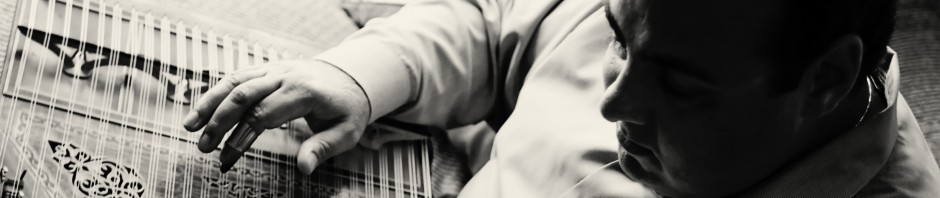
As a musician myself, I’ve been struck this year by how many Armenian composers and performers are writing music that carries the tension of exile. Some pieces echo village melodies that feel like they’ve been pulled from the soil. Others are minimalist and atmospheric, evoking unsettledness—the feeling of having nowhere to stand.
Across Armenian music festivals in 2024–2025, you can hear:
- modal melodies bending downward, like a sigh
- kanun and oud lines that end with unresolved phrases
- percussion that feels like a heartbeat under strain
- vocals that crack intentionally, expressing what words cannot
Even new generations—musicians raised entirely in diaspora—are experimenting with soundscapes that evoke longing and geographic memory.
It reminds me that displacement doesn’t just change borders; it alters the emotional architecture of our art.
Why This Matters Now
We are living in a moment where Armenian identity feels both fragile and fiercely alive.
Our communities are scattered across the world. Our homelands have been threatened, emptied, or reshaped. And yet, the creative output of the last two years shows something remarkable: Armenians will always respond to loss not with silence but with creation.
Art becomes the place where we reclaim what was taken.
Art becomes the place where we reimagine what can still be.
Art becomes the place where we insist: we are still here.
The artists of 2024–2025 are not simply documenting trauma—they are building a cultural archive for future generations, just as earlier waves of Armenian writers, musicians, and painters did after 1915.
Their work ensures that displacement does not have the final word.
Where We Go From Here
If we want Armenian art to continue being a force for resilience, then we must support the artists creating it:
- Watch their films.
- Buy their books.
- Attend their performances.
- Share their stories.
- Commission their work.
- Talk about them to your children.
Displacement tries to erase.
Art insists on remembering.
And in this chapter of our history, Armenian artists are doing what they have always done—helping us carry the weight of our past while imagining a future where our culture not only survives but thrives.


 HYE Times