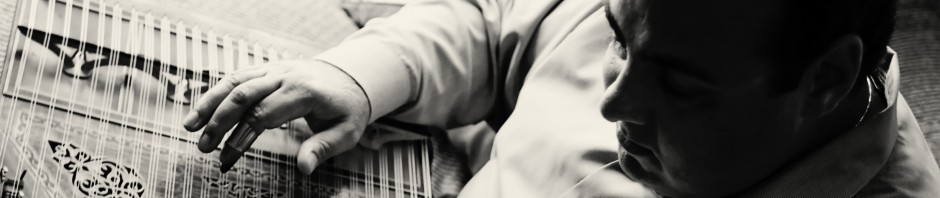
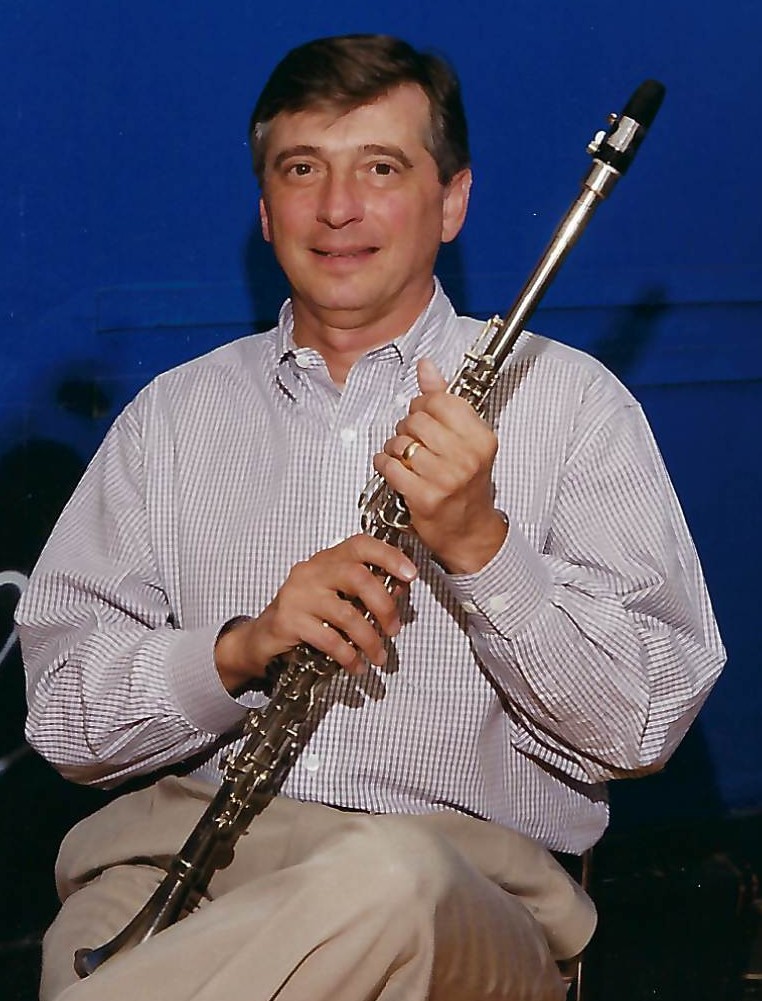
Publicity photo for Cafe’ Makam (1999)
I knew this day would come, but I chose to ignore it—or maybe I just wasn’t ready to accept it. Our diverse musical community, spanning Armenia, the Balkans, Greece, and the Middle East, has lost a giant. Jim “Dimitri” Stoynoff has passed away, leaving behind a legacy that is impossible to replace. He was a force on the clarinet, channeling the spirit of legends like Şükrü Tunar, Vasilios Saleas, and Ivo Papasov. To me, his tone, technique, and command of the instrument were simply unmatched.
I’ve known Jim for about thirty years. I was first introduced to his music by Dino Pappas—a master discographer with an extraordinary collection and someone I’ve written about before. Dino mentioned him largely because of his Midwest connections and his virtuosity on the clarinet. My first in‑person meeting with Jim came later in Chicago, Illinois, where he was performing for a Balkan dance festival that included Joe Zeytoonian, a prominent Armenian oudist from Florida and mutual friend. We hit it off immediately, and that initial spark developed into a lasting friendship.
Jim was a friend—the kind of friend that, even if you didn’t talk often, you could always pick up right where you left off. In later years, life got busy, as it does, and we didn’t speak as regularly. But whenever we reconnected, it was effortless. He’d crack jokes, make me laugh, and the conversation would flow like no time had passed. That was part of his magic—he made you feel like you were always in his orbit, no matter how long it had been. Always happy where music was involved, it was clear that music was more than passion, but meditative.
When you play as many gigs as we did, you either remember them all… or barely any. But I remember every performance I had with Jim. There was always something wild, hilarious, or musically unforgettable.
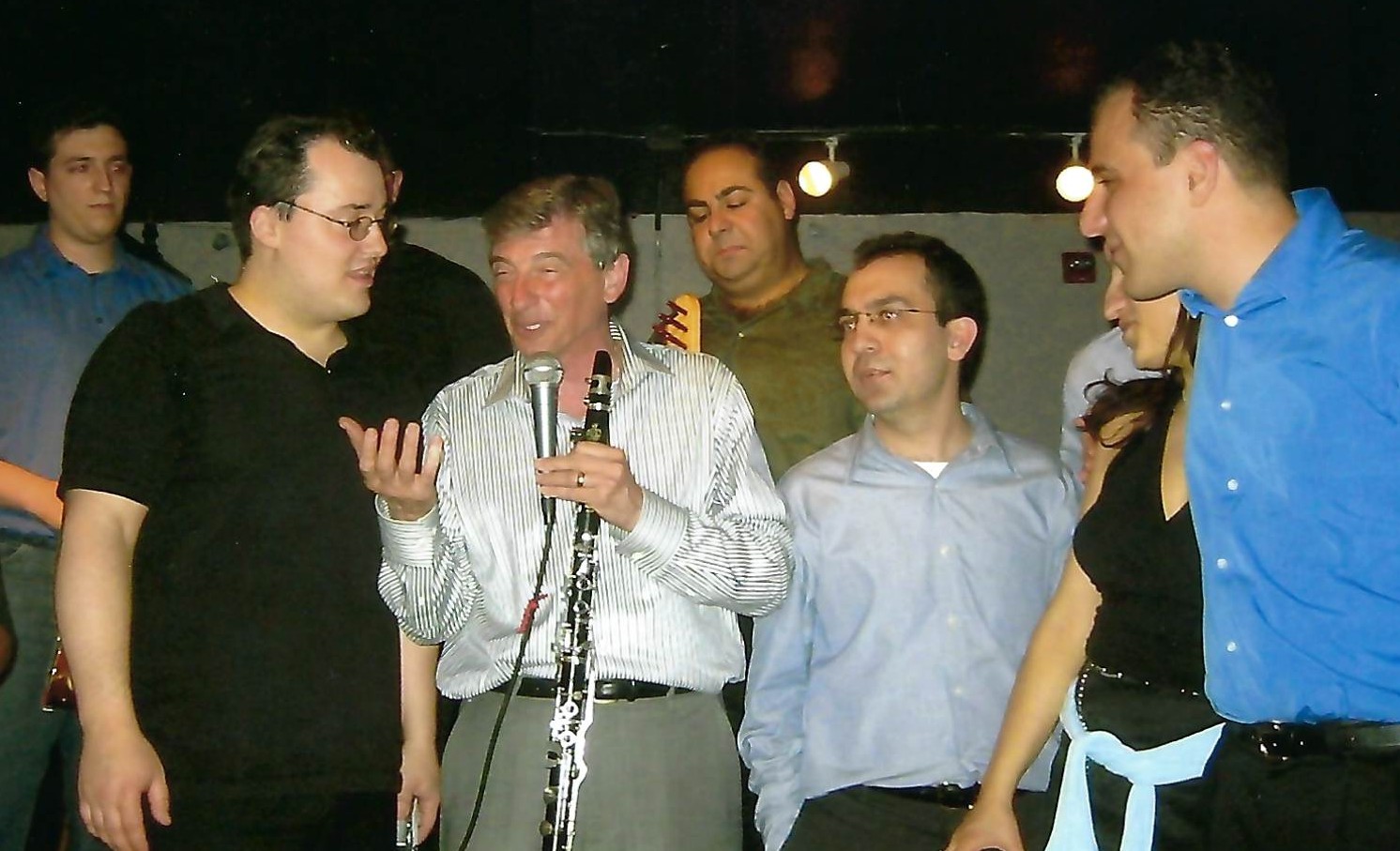
The performance in Ann Arbor, MI where Jim took to the mic at the end of the night.
One memorable moment was a performance for a joint Greek-Turkish student organization in Ann Arbor, MI. To be honest, I wasn’t particularly eager to play that event—but I did it because Jim asked me to. The music itself was fantastic, performed by an ensemble representing a variety of ethnicities. But what truly stayed with me was Jim’s message at the end. He took the mic and spoke with passion about the power of the music we played—music that transcended borders and bridged cultures. He urged the students to look beyond politics and history and instead focus on what unites us. It was a powerful moment. Watching him speak with such sincerity and conviction left a lasting impression on me.
Then there was the Asia Minor concert held at the Old Town School of Folk Music. We were playing a mix of Greek, Macedonian, and Turkish music. Voula Karahaliou was the featured singer and Jim was both the featured musician and narrator, sharing the history of each piece. During rehearsal, there was a heated debate about the soundcheck between Jim and a few of the Greek musicians in the ensemble along with the sound engineer. It was, quite literally, “all Greek to me.”
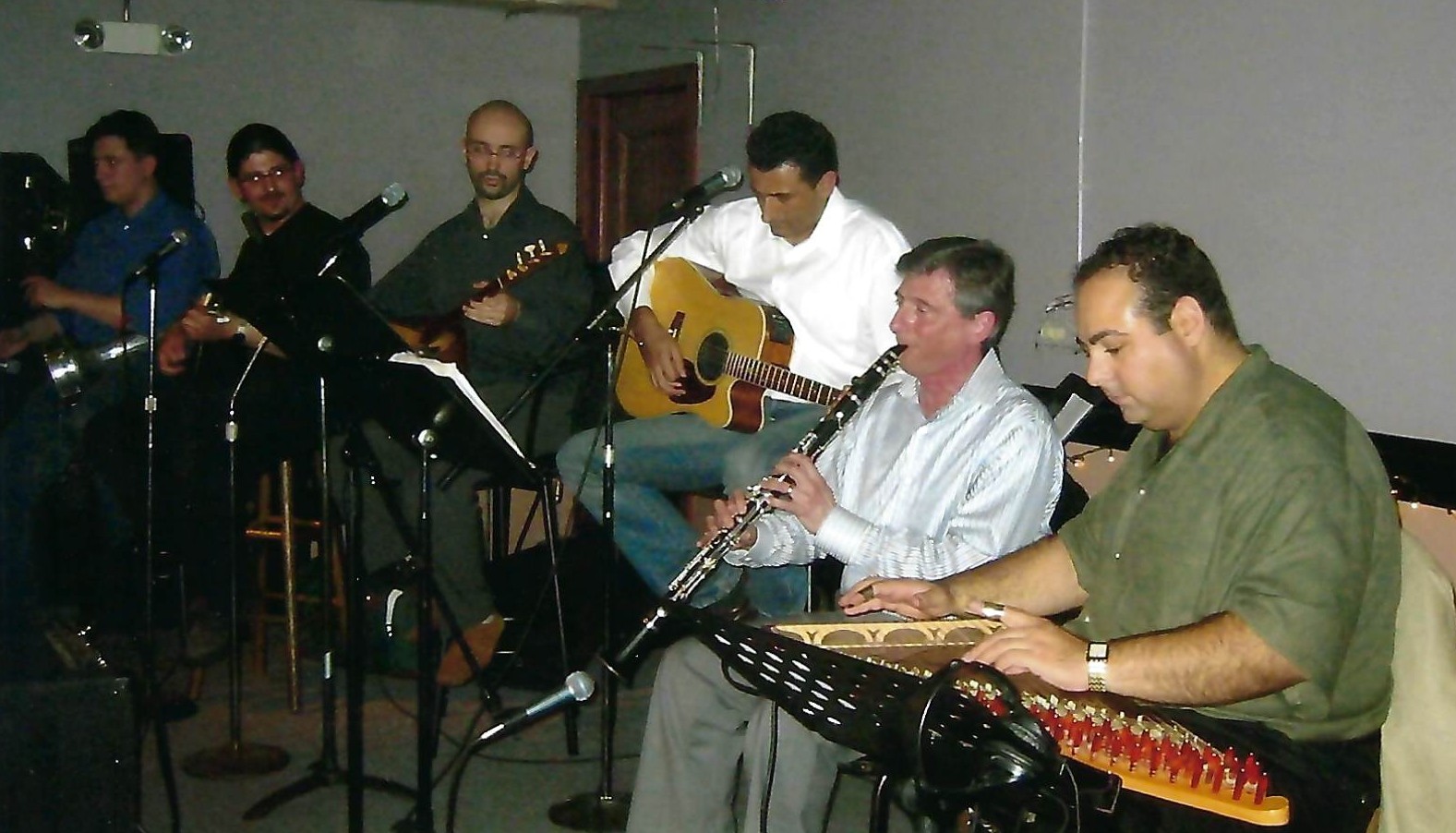
Enjoying some music together…
All of sudden, the dialogue stopped. Without a word, Jim calmly/quietly began disassembling his clarinet, cleaned the barrels, packed his reeds in his case, packed up his belongings, and …walked off the stage. The other musicians looked at me, stunned. After all, Jim was the show and he simply left without incident. I panicked—not only because we needed him, but also because I was staying at his house and he was my ride!
I ran out and found him across the street, sitting at a restaurant with a big smile and a glass of raki. I sat down, pleaded with him to come back. And he did. The concert that almost didn’t happen was an amazing experience!
Jim was a passionate scholar as much as he was a performer. He frequently wrote insightful articles on Balkan, Greek, and Middle Eastern music, and his knowledge of the greats in our genre was nothing short of astounding. He didn’t just study their stories—he often met the legends themselves, including the iconic Roza Eskenazi. Name a musician, and chances are Jim had either met them or could recite their biography from memory. His deep understanding of makams—the intricate scales of Middle Eastern music—was exceptional. It was always clear that music wasn’t just something he did; it was his lifelong love. His teachers were some of the greatest masters of Greek and Middle Eastern music including Yiorgo Anestopoulos, Saffet Gundeger, Barbaros Erkose and others.
I had the privilege of re-releasing his album Return to Our Roots, a tribute to the legendary Greek clarinetists of the last century. I was also fortunate to record with him in Detroit on an album called Café Makam, which featured Jim on clarinet and Joe Zeytoonian on oud. The music we created together on that project was truly something special.
In total, I only had the chance to perform with Jim about a half dozen times—but we spoke often and shared a love of music that kept our friendship strong. His musical accomplishments that included performing in Yoyo Ma’s Silk Road residency as well as appearing with the Chicago Symphony Orchestra, for the opening of the Chicago World Music Festival.
Jim wasn’t just a musical genius—he was also a savvy and accomplished businessman.
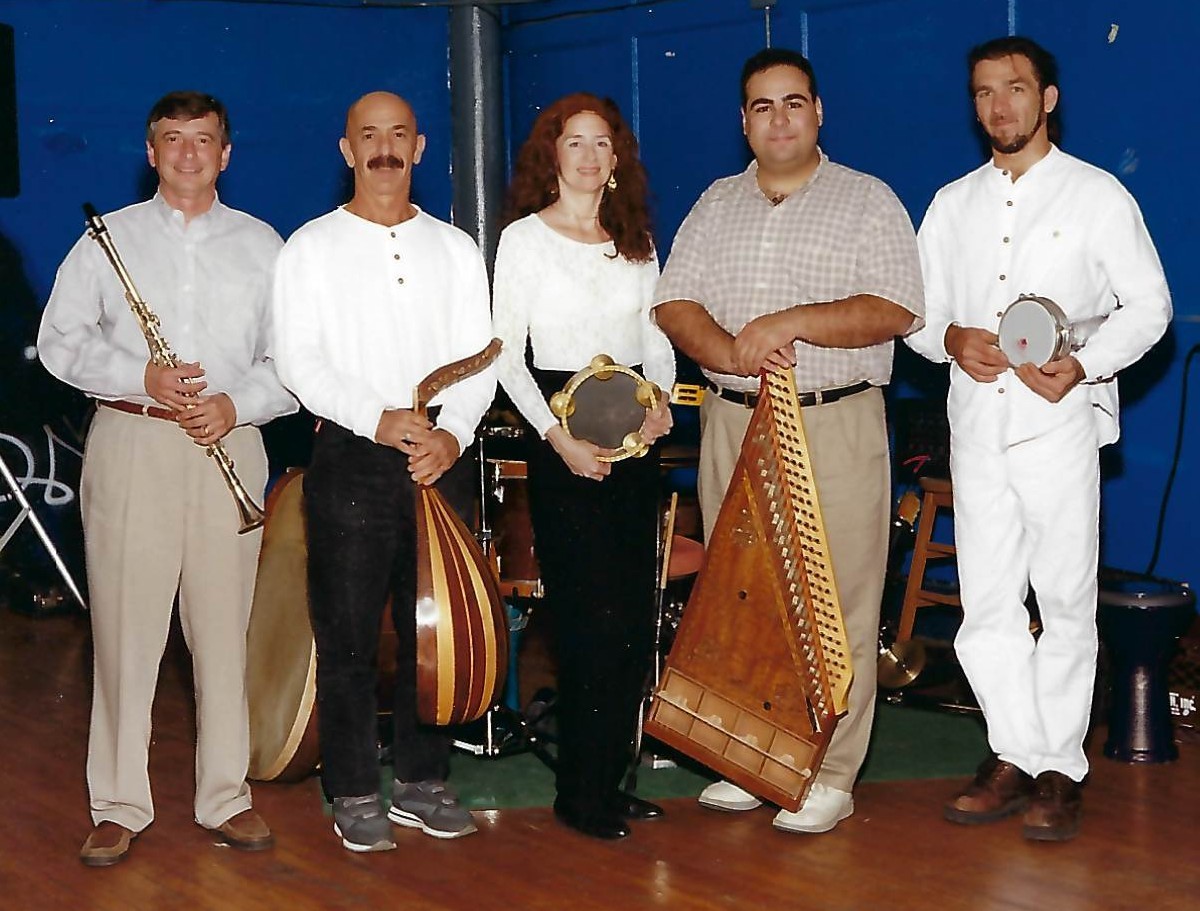
The Cafe’ Makam ensemble featuring Jim, Joe Zeytoonian, Myriam Eli, Mark Sawasky, and myself (1999)
Jim brought the same passion to entrepreneurship as he did to music. He built a successful career that included running a staffing agency and later launching a consulting firm focused on helping nonprofit organizations—an area close to my heart. Beyond his own ventures, Jim was deeply committed to giving back. He mentored countless individuals in the business and nonprofit communities, always willing to share his experience, insight, and time to help others grow and succeed.
One memory that still makes me smile: Jim had once introduced me to raki. I can’t say it’s my favorite drink, but he swore by a brand called Altınbaş, which he considered the best. Years ago, I managed to track down a bottle. I only ever opened it once—when I had the chance to share a glass with him. That bottle still sits on my shelf, untouched since we opened it together. It’s more than just a drink now—it’s a reminder of our friendship and the moments that linger long after the music fades.
I will miss him deeply. We’ll miss his music, his humor, and the pure joy he brought into every room. I’m grateful to have known him, to have called him a friend—and I wish him eternal peace.


 HYE Times