A Tribute to Simon Javizian: A Guardian of Our Music, Memory, and Community

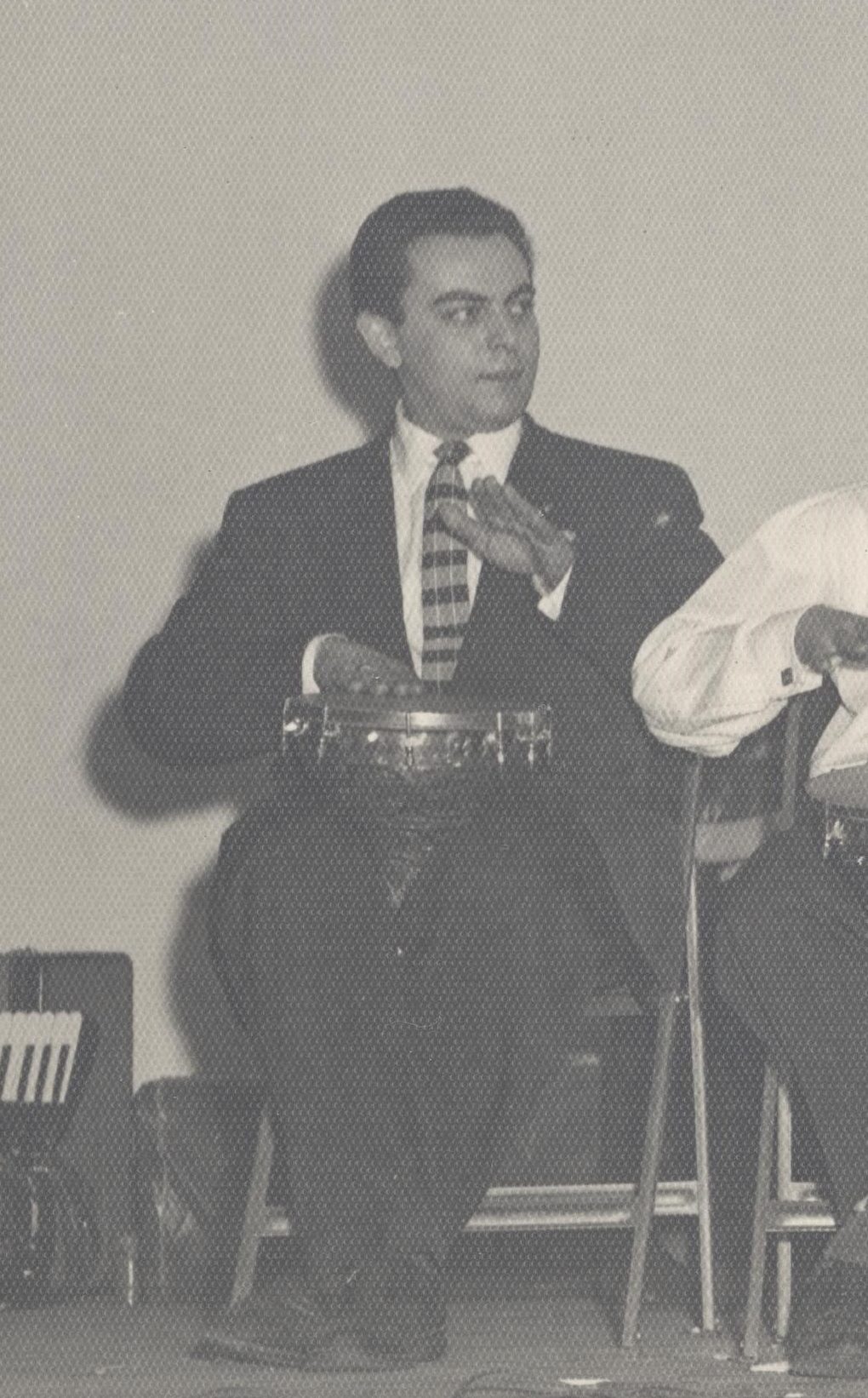
A rare picture of Simon playing dumbeg at a Detroit Armenian wedding around the 1950s.

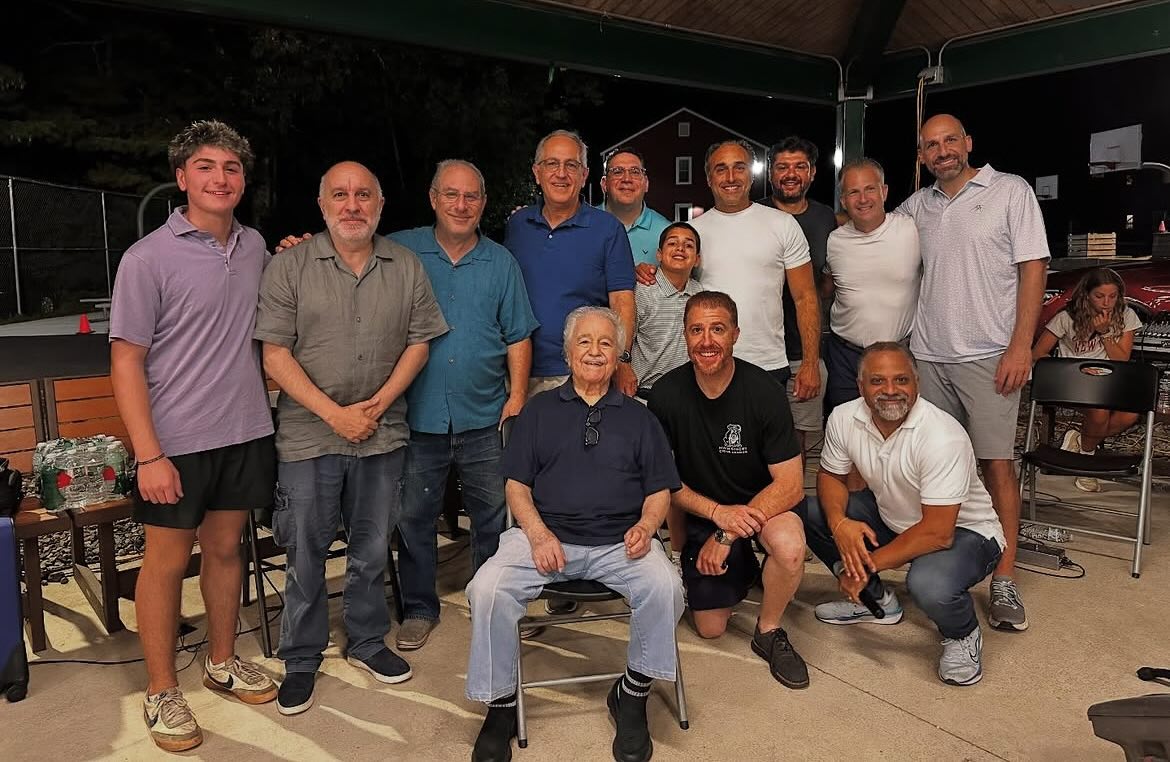
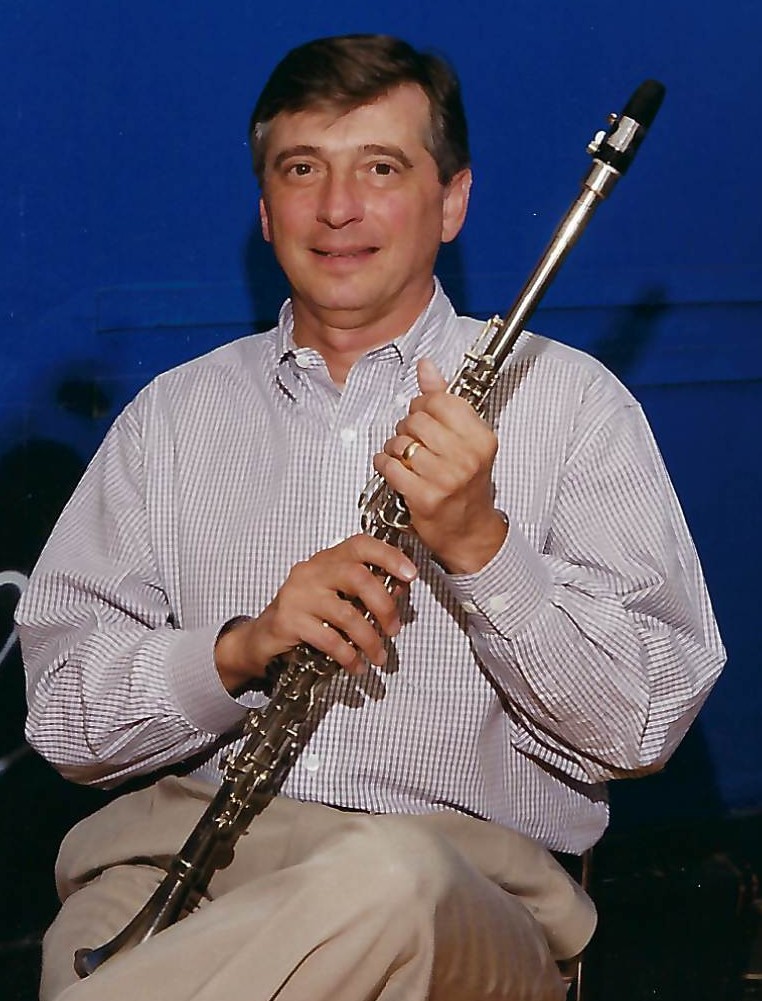
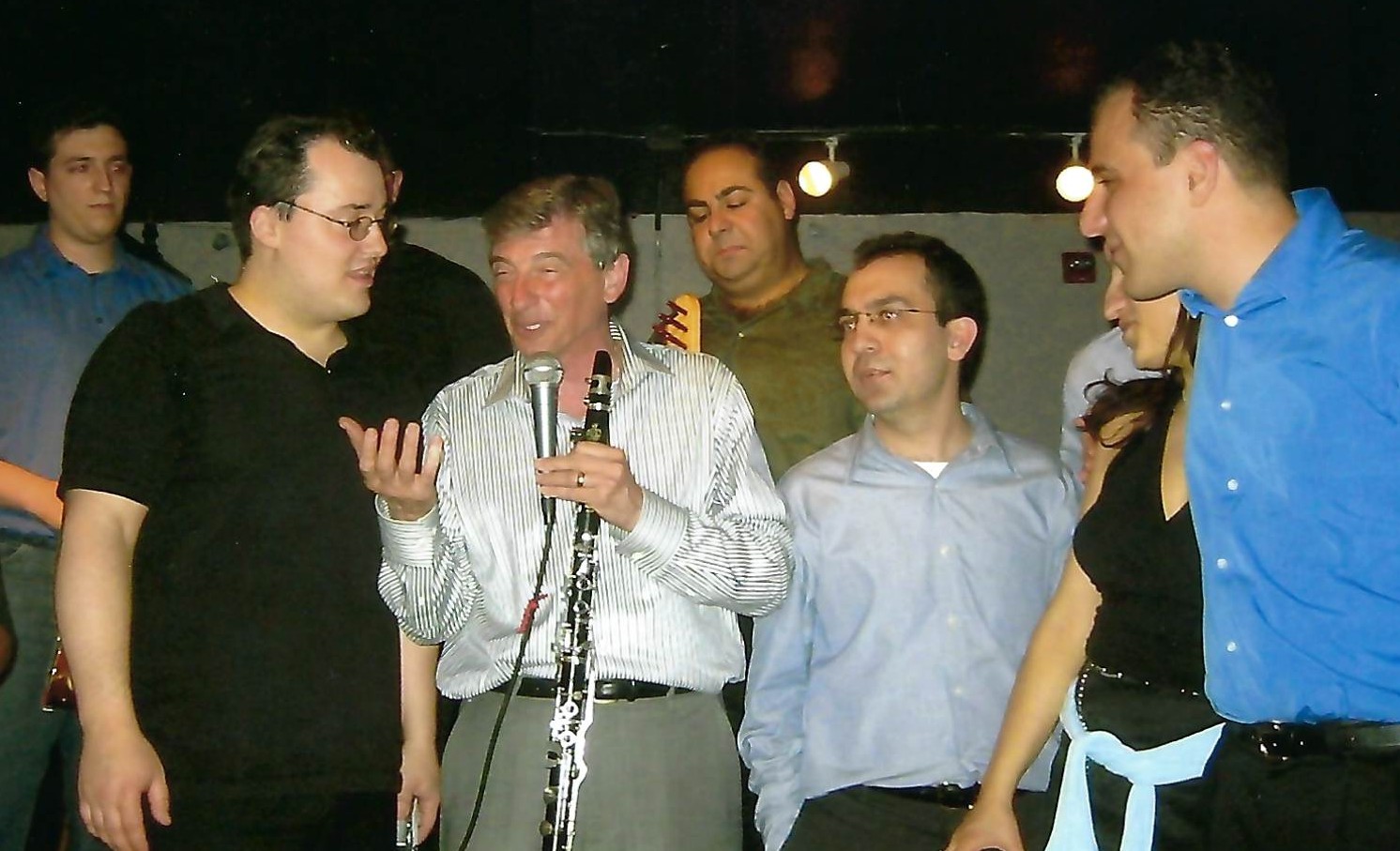
A couple of days ago, we lost someone truly special: Simon Javizian, at the age of almost 92. To many, he was a musician, a funeral director, a storyteller, and a pillar of the Armenian community. To me, he was also a longtime friend—someone whose kindness, warmth, and humor left a lasting imprint on my life.

I knew Simon and his beloved wife, Alice, for many years. They were the type of couple who made you feel welcome without trying. In fact, I will never forget the Armenian music cruises we were on, where we were next-door neighbors; every morning, without fail, Alice would pass over a pot of fresh coffee across our shared balcony. It’s one of those simple gestures that says everything about who they were.

A Musician From Our “Classic Era”

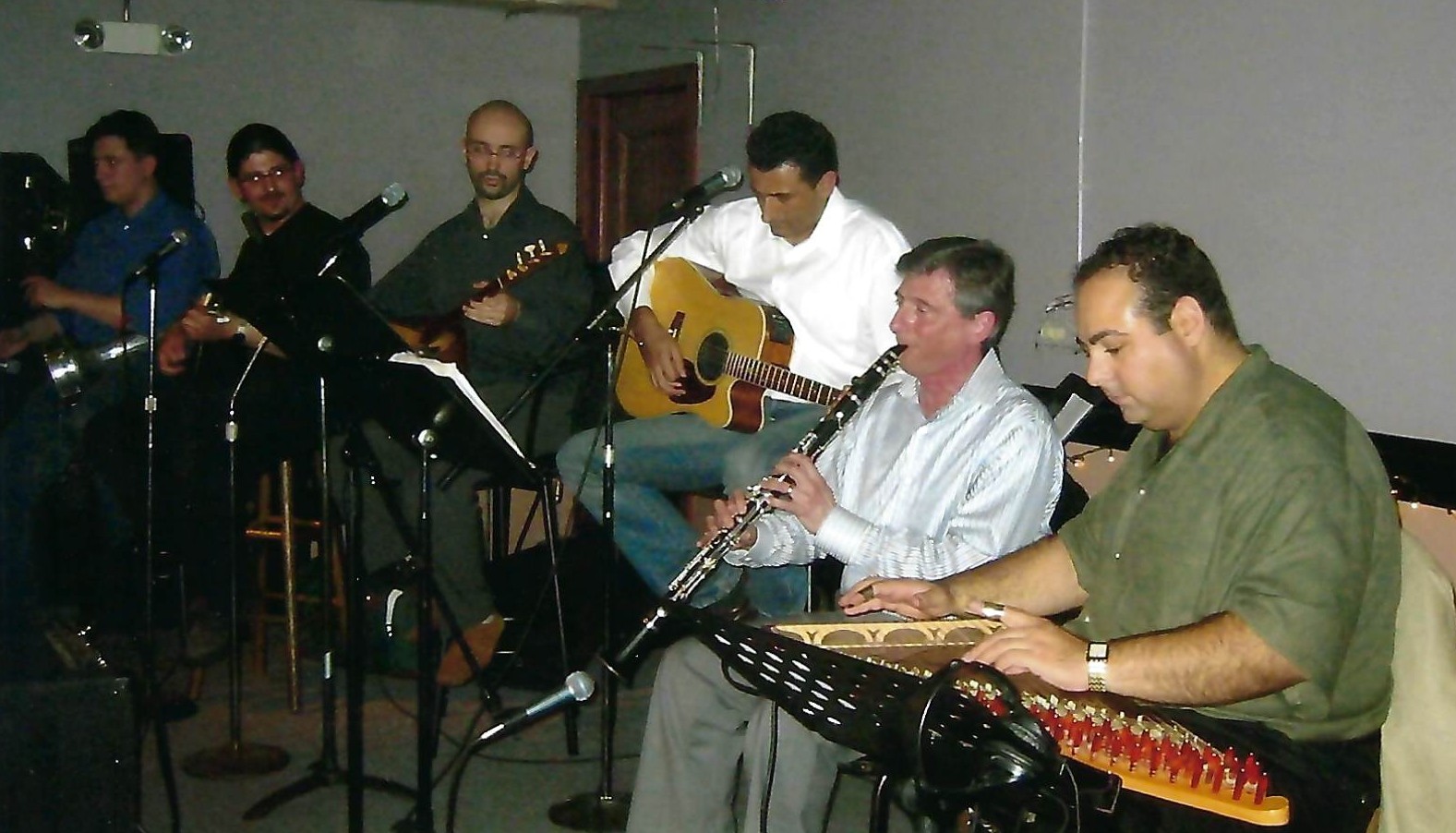
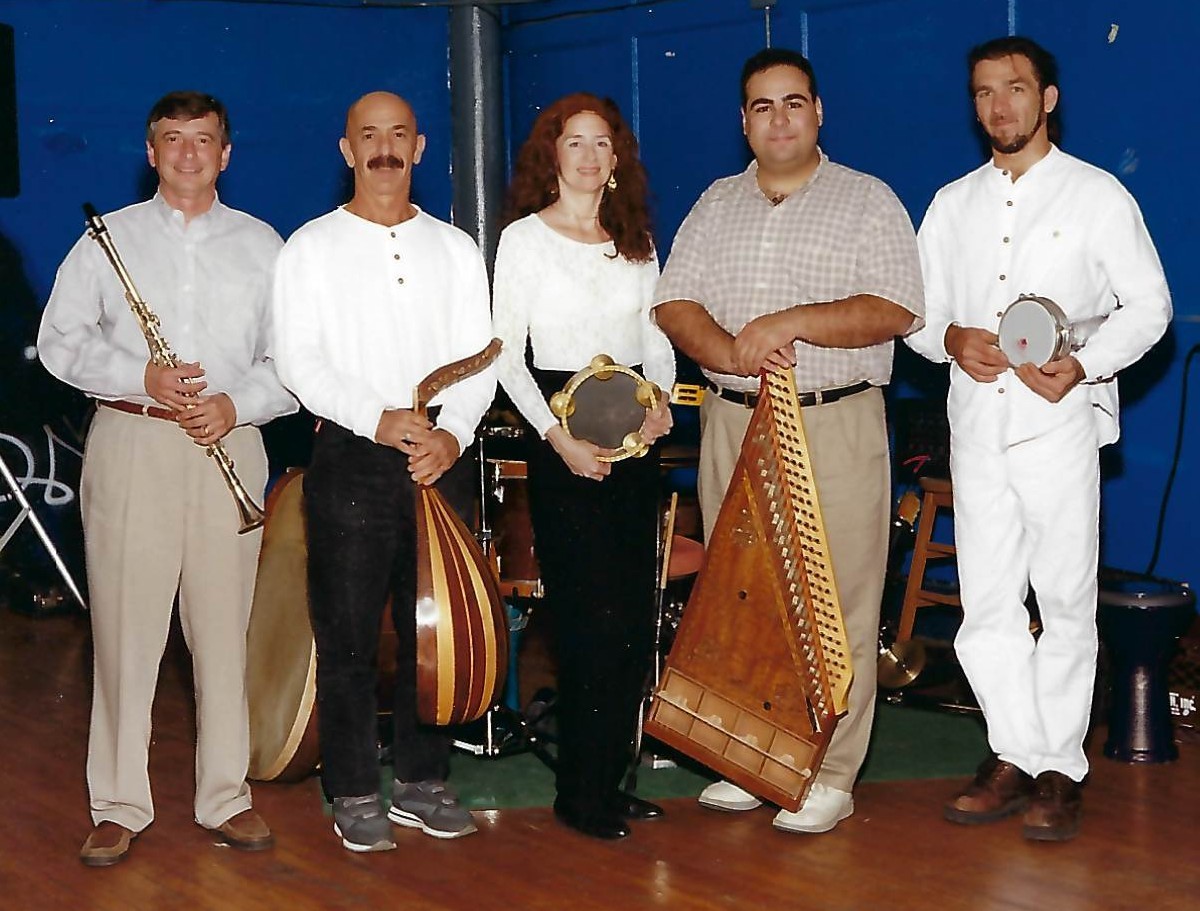
Simon was part of that golden generation of Armenian-American musicians from the 1950s and 1960s. A talented clarinetist—and at times, a saxophonist and vocalist—he formed the band Ardziv Band, a group remembered as one of the influential ensembles of its era. They recorded one unforgettable album, Traveling with Kef, which still stands as a snapshot of the sound and spirit of Armenian community dances in those decades.
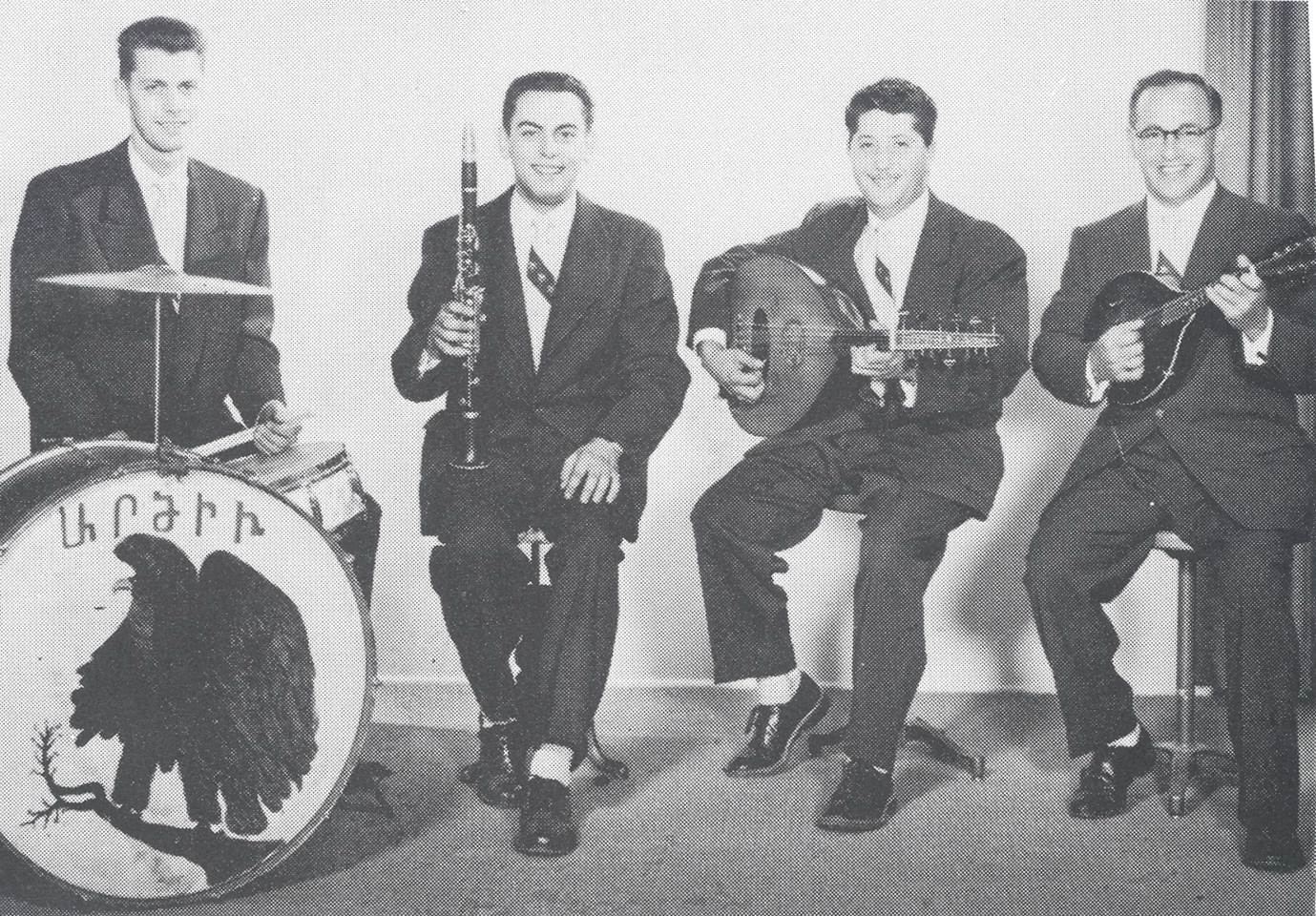
Simon and his Ardziv Band.

His signature song, the one everyone remembers him for, was Haideh Kaleh.  There was a joy, a wink, an energy that only he could deliver.

I had the honor of performing with Simon many times over the years—sometimes with him on clarinet, sometimes on saxophone, and often with him singing. Being on stage with him felt like being part of history.

A Keeper of Stories and a Keeper of Culture

More than a decade ago, I began work on a documentary commemorating the 100th anniversary of the Armenian Genocide, focusing on the musicians who shaped the Detroit Armenian community. Simon was an integral part of that project.

I remember interviewing him like it was yesterday. He shared stories with emotion that filled the entire room—sometimes joyful, sometimes teary-eyed, always sincere. You could feel the soul behind every word. He knew the weight of what he lived through and the importance of keeping our culture alive through music.

Somewhere deep in my heart, I am grateful that I was among the first to video-record Simon as part of a documentary, capturing these memories and his musical career before time could steal them away. The film, Guardians of Music: A Tribute to Detroit Armenian Musicians, later aired worldwide on PBS, ensuring that Simon’s legacy reached far beyond Detroit.

A Dedicated Funeral Director—and a Humorist
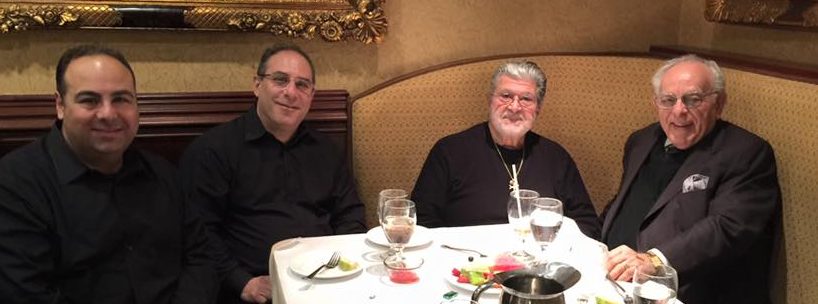
After a concert I performed with Mal Barsamian, we went to dinner with Hachig Kazarian and Simon Javizian.

One of the funnier memories I have of Simon came from a simple question I asked many years ago: “Why did you stop playing music?”

Without missing a beat, he said, “It was bad for business.”

As a funeral director, he explained that some Armenian families weren’t too happy to see him conducting a burial one day and playing a wedding the next. He always told this story with that trademark twinkle in his eye—as if he knew how ridiculous it sounded, yet how true it was.

To this day, I believe Simon may hold the distinction of being the only Armenian musician whose day job was being a prominent funeral director. And he wore both roles—musician and caretaker—with dignity, professionalism, and compassion.

A Servant of Community

Simon was also heavily involved in the Detroit Armenian community. We worked together in the 100 Hyes organization, where he took part in the annual religious ceremony honoring those who had passed. He led these moments with deep reverence and emotional sincerity. It was clear that this was not just tradition for him—it was personal.

A Life Remembered

I will miss Simon.

I will miss his compassion, the way he cared about people.

I will miss his stories, each one a window into a time that no longer exists.

I will miss his singing, his laughter, and the joy he carried with him.

And above all, I will miss the presence of someone who genuinely loved Armenian music, culture, and community—and gave so much of himself to preserve them.

Simon shared his musical life with all of us. And I am grateful beyond words that we were able to capture his story, his voice, and his passion on film so future generations can appreciate the legacy he leaves behind.

May his memory be eternal. Asdvadz Hokin Louysavoreh.
Posted in Armenian, detroit, music | Leave a comment

How Armenian Artists Are Responding to Displacement in 2024–2025

In the Armenian world, art has always been more than creative expression. It has been testimony. Survival. A thread tying one generation to the next. And in the last two years—following the mass displacement from Artsakh in 2023 and the global unease that has followed—Armenian artists have once again stepped into that ancient role: carriers of memory, witnesses to trauma, and architects of cultural continuity.

Across film, music, visual art, and literature, a wave of Armenian creators is responding to displacement with new work that is urgent, vulnerable, and deeply rooted in our shared story. These artists are doing what our ancestors did in their own moments of upheaval: turning loss into language, exile into vision, and silence into sound.

Below is a look at some of the artists shaping this moment, and why their work matters now more than ever.


The Ever-Present Shadow of Artsakh: Sareen Hairabedian

In a January 2025 interview, filmmaker Sareen Hairabedian reflected on why she felt compelled to document life in Artsakh before its fall. Her words capture something that nearly every Armenian has felt in the past two years:

“I wanted to draw attention to Artsakh… even if there was no active war, there was the cloud of war.”

That cloud didn’t just hang over Artsakh—it hangs over all of us.

Hairabedian’s most recent work explores the psychological landscape of a people living between peace and annihilation, trying to preserve daily life when the ground beneath them is never steady. Her film is not simply about geopolitical conflict; it is about the love and fragility of home.

In her visuals, we see mothers planting flowers beside the ruins of old buildings. Children flying kites in the shadow of mountains they would soon be forced to abandon. These are the quiet, human details that rarely make international headlines but define the soul of our story.

Hairabedian’s work reminds us that displacement is not abstract—it is people, history, and memory uprooted at once.


Ara Oshagan and the Question Every Diasporan Carries

While artists in Armenia and Artsakh grapple with the trauma of physical displacement, diaspora artists are confronting a different but related burden: the weight of inherited dislocation.

In an April 2025 panel on diaspora memory and identity, acclaimed artist and curator Ara Oshagan posed a question that stopped the room—and later traveled across Armenian social media:

“When you’re disconnected from the land, how do you connect to your homeland?”

It is a question every Armenian living outside Armenia has carried in some form.

Oshagan’s work—whether photography, documentary, or installation—often explores the blurred boundaries between memory and belonging. In that same discussion, he added:

“There is that kind of layering and ambiguity in the space that we live in, in terms of the language we speak—not only language, but the way we think.”

Our identity is a collage. A mosaic. A constant negotiation between the world we live in and the world we inherited.

Through his art, Oshagan isn’t offering answers. Instead, he invites us into the complexity—into the overlapping realities of being Armenian in diaspora, where the homeland is both close and painfully far.


Visual Artists Turning Memory Into Resistance

In the fall of 2025, Armenian publications highlighted the work of painter Eleanora Saghatelyan, whose recent exhibitions focus on the emotional landscape of Artsakh’s displaced families. Her work features stark portraits—women holding photographs of homes they can no longer return to, men silhouetted against the outline of lost mountains.

Another deeply moving voice is artist Marie Khediguian, whose series “Ballads of Displacement” explores intergenerational trauma and migration. Speaking about the people and stories that shape her work, she said simply:

“I carry them with me always.”

In just six words, she expresses what binds Armenian art across generations: the weight of remembrance, and the responsibility to transform it into something living.

Khediguian’s canvases blur the past and present—sepia-toned faces emerging from modern textures, archival patterns woven into contemporary compositions. Her art mirrors the Armenian experience itself: always looking forward, always looking back.


Women Telling the Truth of Displacement

One of the most powerful projects of 2025 was “They Say We Have to Leave,” a collection of testimonies from 120 Artsakh women who lived through forced displacement. Their voices—poetic, raw, and courageous—became the backbone for new performances, readings, and musical interpretations across the diaspora.

The project does what Armenian women have always done: sustain memory, keep communities together, and turn grief into purpose.

These voices are not only telling their stories—they are pushing Armenian art into new forms of activism and historical documentation.


What Music Sounds Like After Displacement

As a musician myself, I’ve been struck this year by how many Armenian composers and performers are writing music that carries the tension of exile. Some pieces echo village melodies that feel like they’ve been pulled from the soil. Others are minimalist and atmospheric, evoking unsettledness—the feeling of having nowhere to stand.

Across Armenian music festivals in 2024–2025, you can hear:

  • modal melodies bending downward, like a sigh
  • kanun and oud lines that end with unresolved phrases
  • percussion that feels like a heartbeat under strain
  • vocals that crack intentionally, expressing what words cannot

Even new generations—musicians raised entirely in diaspora—are experimenting with soundscapes that evoke longing and geographic memory.

It reminds me that displacement doesn’t just change borders; it alters the emotional architecture of our art.


Why This Matters Now

We are living in a moment where Armenian identity feels both fragile and fiercely alive.

Our communities are scattered across the world. Our homelands have been threatened, emptied, or reshaped. And yet, the creative output of the last two years shows something remarkable: Armenians will always respond to loss not with silence but with creation.

Art becomes the place where we reclaim what was taken.
Art becomes the place where we reimagine what can still be.
Art becomes the place where we insist: we are still here.

The artists of 2024–2025 are not simply documenting trauma—they are building a cultural archive for future generations, just as earlier waves of Armenian writers, musicians, and painters did after 1915.

Their work ensures that displacement does not have the final word.


Where We Go From Here

If we want Armenian art to continue being a force for resilience, then we must support the artists creating it:

  • Watch their films.
  • Buy their books.
  • Attend their performances.
  • Share their stories.
  • Commission their work.
  • Talk about them to your children.

Displacement tries to erase.
Art insists on remembering.

And in this chapter of our history, Armenian artists are doing what they have always done—helping us carry the weight of our past while imagining a future where our culture not only survives but thrives.

Posted in Uncategorized | Leave a comment

When Music Becomes a Passport: The Role of Global Festivals in Preserving and Sharing Culture

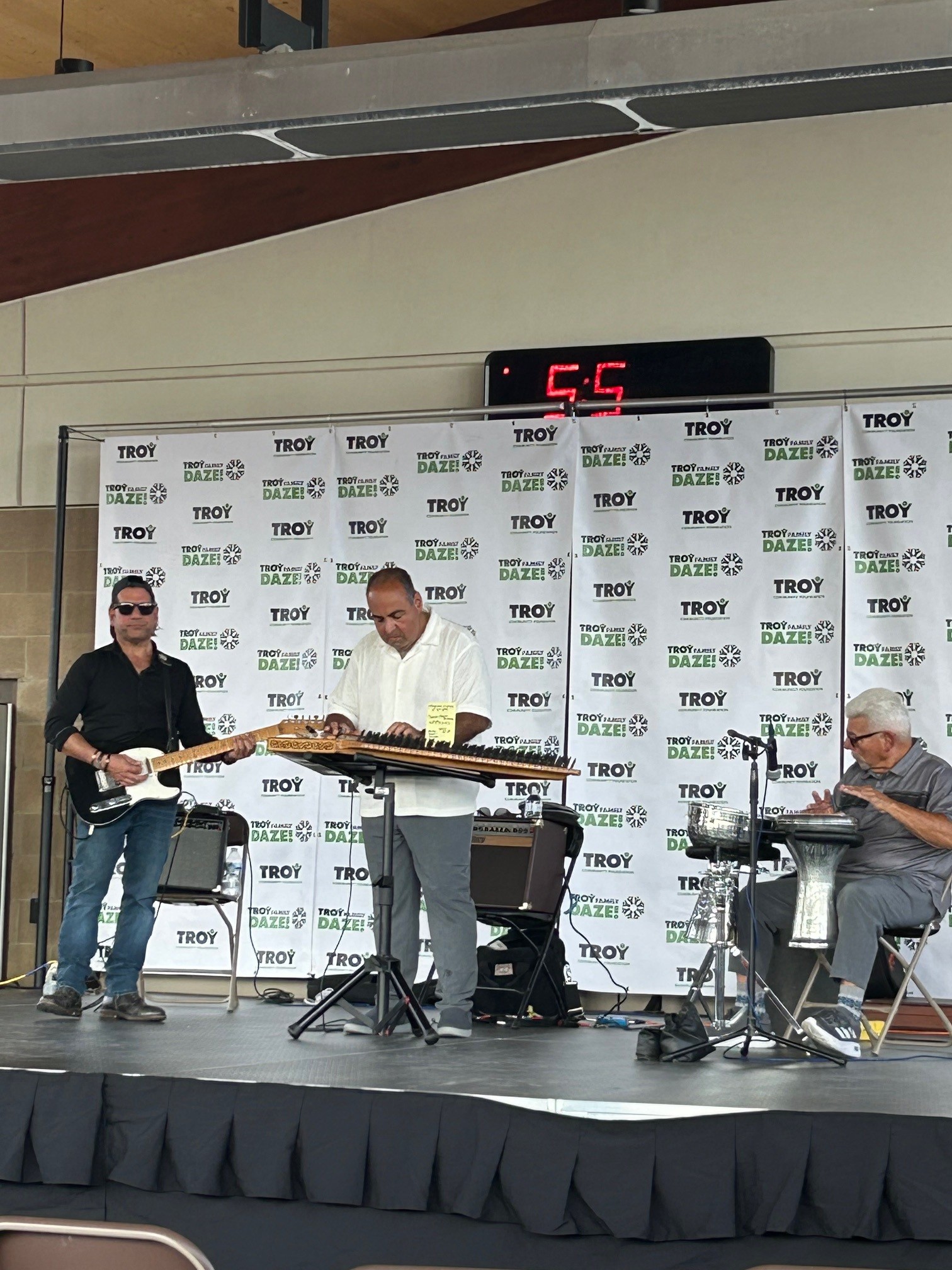
Ara, George, and Jerry performing at Troy Family Daze during Global Troy’s heritage day.

Last weekend, I had the opportunity to perform at Troy Family Daze in Troy, Michigan, as part of their Global Troy celebration. I shared the stage with my trio — Jerry Gerjekian on dumbegs and George Nigosian on guitar — for the weekend finale of the festival. The day we performed was filled with heritage-rich performances, each one spotlighting the cultural roots of the artists. Standing on that stage, I couldn’t help but reflect on the role festivals like this play in preserving and sharing the music of our heritage.

The Power of World Music Festivals

World music festivals are more than entertainment — they are living classrooms. Each drumbeat, melody, and lyric carries history. They tell stories of migration, struggle, joy, and resilience. For many in the audience, hearing an Armenian kanun, an Indian sitar, or an African kora for the first time opens a door to another culture they might not otherwise encounter.

Music bypasses language. It builds empathy. It invites curiosity. A single set at a festival can spark someone’s interest in exploring a culture more deeply — through food, travel, literature, or personal connection.

Michigan’s Place in the Global Music Scene

Michigan has no shortage of music festivals. From Detroit’s legendary Concert of Colors to the Ann Arbor Summer Festival, we see moments where global music traditions are celebrated. And yet, I often wonder: Do we have enough true world music festivals here?

Many of Michigan’s festivals mix heritage acts into broader lineups, but there is still room for more platforms dedicated exclusively to world and folk traditions. Michigan is home to a diverse and growing global community, and world music festivals are a natural way to reflect and honor that.

Learning Heritage Through Performance

As an Armenian musician, every performance is a chance to keep tradition alive. When I play the kanun on a stage like Global Troy, I’m not just playing an ancient instrument — I’m sharing centuries of Armenian history with new audiences. Paired with Jerry’s rhythms on the dumbeg and George’s guitar textures, our trio brings an old-world sound into a new-world setting.

For other artists that weekend, it was the same story. Each act carried the heritage of their ancestors into a suburban Michigan park, offering the crowd a journey across borders without leaving Troy.

The Best Way to Understand Culture?

Are world music festivals the best way to understand culture? Perhaps not the only way, but certainly one of the most powerful. Books and films teach us, but music touches us. It’s experiential. It’s visceral. It makes you feel before you even understand.

Festivals are not the end of cultural discovery — they are the spark. They can ignite a lifetime of learning, inspire someone to seek out community, or simply plant a seed of respect for traditions different from their own.

Building Bridges Through Music

My experience at Troy Family Daze reminded me that world music festivals are not just about preserving traditions — they are about building bridges. They bring people together across backgrounds, generations, and languages. In an increasingly divided world, these moments of cultural exchange matter more than ever.

So the next time you see a flyer for a world music festival in Michigan — whether it’s in Detroit, Ann Arbor, or right in your own backyard — I encourage you to go. Listen. Learn. Let the music become your passport.

Posted in culture, detroit, music, world music | Leave a comment

When Songs Travel: From History to TikTok

Recently, I came across a fascinating article on Houshamadyan: A Song’s Journey
by Ara Dinkjian. In it, Ara traces the path of a melody—how it traveled across countries and cultures, transformed along the way, and eventually became part of the musical backdrop of Armenian-American life in the Catskills.

As I read, I couldn’t help but think about how songs continue to travel today—often in ways that musicians never intended. In particular, platforms like TikTok have become the new “stage” where millions of people hear music, sometimes without ever knowing who wrote or performed it.

For those of us who dedicate our lives to creating and preserving music, this is both exciting and frustrating. Exciting, because the reach is enormous: one short video can introduce a traditional Armenian tune—or any piece of music—to audiences all over the world. But frustrating, because the artists behind the music often don’t receive recognition or compensation.

TikTok recently introduced something called Songwriter Features, aimed at giving more visibility to creators. As the platform states, this feature is designed to “highlight and give due credit on TikTok to the amazing work of songwriters and the music they have created.” It goes on to note that “songwriters’ musical works and their shared content will sit side-by-side in one place on TikTok for the first time,” allowing artists to “share stories about their work, their music and their lives.”

On paper, that sounds promising. But in reality, it’s still a closed beta available only to a handful of publishing partners and selected songwriters—and notably, not accessible to most independent artists, especially those in niche or diasporic musical traditions like ours.

Currently, I don’t know a single musician who is receiving royalties when their recordings are used in TikTok videos. Think about that: a song might be the emotional heart of a viral clip, but the creator of that music sees nothing. It’s as if the melody has become background wallpaper—present, powerful, but invisible.

History shows us that songs endure because they connect us to culture, memory, and identity. The Catskill Armenian community valued those melodies enough to sing them, play them, and pass them on. Shouldn’t our modern platforms do the same by ensuring artists are credited and paid fairly when their work fuels online creativity?

As an Armenian-American musician, I’ve seen firsthand how music carries stories across generations. I believe TikTok and other platforms need to respect that journey by giving credit where it’s due—and by sharing revenue with the musicians who make the soundtrack of our lives.

After all, without the music, the videos wouldn’t have the same power. Isn’t it time we honored the artists behind the sound?

Posted in Business of Music, creativity, music | Leave a comment

From Song to Autographs: When History Took the Stage

There are moments in Armenian music that remind us why we do what we do—why we sing, why we play, why we hold so tightly to the songs of our ancestors. One of those moments happened recently at Camp Haiastan, when Onnik Dinkjian—yes, the Onnik Dinkjian—came out of retirement at the age of 96 to perform for a new generation of Armenian youth.

Armenian musicians donating their time to perform at Camp Haiastan

Not only did he sing—he sounded incredible. Strong, clear, and filled with the same soul that has moved so many of us for decades. And he looked great doing it, standing before a crowd of young Armenians who were seeing a living legend not just remembered—but still performing.

I wasn’t there, but oh how I wish I could have been. To be on stage with Onnik, accompanying him, sharing that moment—that would’ve been unforgettable. Thankfully, I saw the videos on social media. They quickly made the rounds—going viral, at least by Armenian standards—and I found myself replaying them, in awe of the voice, the presence, and the energy he still brings at 96 years old.

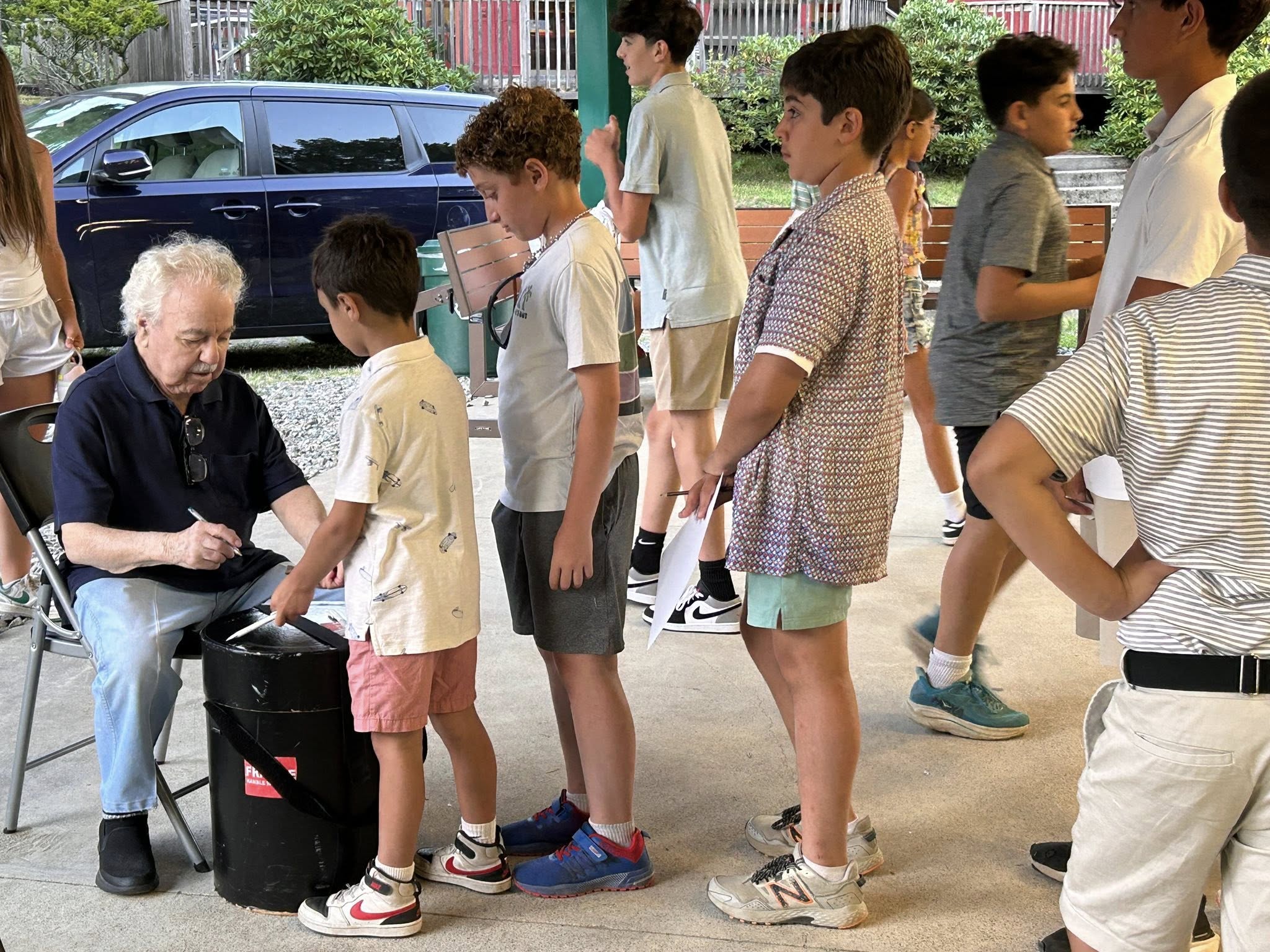
Children lined up to get Onnik’s autograph

What struck me most wasn’t just the performance, but the reaction. After he sang, Onnik had a line of kids waiting for his autograph. Not selfies. Not TikToks. Autographs. That kind of reverence speaks volumes. These young people knew they were in the presence of someone whose voice has carried the story of our people across generations.

It reminded me of a blog I recently wrote about performing with the Hye Vibes at the AYF Olympics in Chicago. There, I watched teenagers dancing to music over a hundred years old—music they felt deep in their bones, even if they couldn’t explain why. What happened at Camp Haiastan was part of that same thread: living culture.

And that’s just it: stories don’t fade when they’re sung.

It’s easy to worry about the future of our music. We talk about how traditional songs are being lost, how fewer American-born Armenian children are picking up the oud, the kanun, the clarinet. But then you witness something like this, and you realize: the roots are still strong. They just need light. They need moments like these.

So I leave you with this question:
Who are the culture-bearers we’re elevating for the next generation?

And just as importantly:
What do we owe legends like Onnik to keep this music alive—not just in archives, but in hearts?

(Video & Photo Credits: Mal Barsamian, Michael Gostanian, Camp Haiastan)
Posted in Armenian, art, culture, Middle Eastern music, oud, Reflections, world music | Tagged , , , , , , , | Leave a comment

When the Clarinet Fell Silent: Remembering Jim Stoynoff

Publicity photo for Cafe’ Makam (1999)

I knew this day would come, but I chose to ignore it—or maybe I just wasn’t ready to accept it. Our diverse musical community, spanning Armenia, the Balkans, Greece, and the Middle East, has lost a giant. Jim “Dimitri” Stoynoff has passed away, leaving behind a legacy that is impossible to replace. He was a force on the clarinet, channeling the spirit of legends like Şükrü Tunar, Vasilios Saleas, and Ivo Papasov. To me, his tone, technique, and command of the instrument were simply unmatched.

I’ve known Jim for about thirty years. I was first introduced to his music by Dino Pappas—a master discographer with an extraordinary collection and someone I’ve written about before. Dino mentioned him largely because of his Midwest connections and his virtuosity on the clarinet. My first in‑person meeting with Jim came later in Chicago, Illinois, where he was performing for a Balkan dance festival that included Joe Zeytoonian, a prominent Armenian oudist from Florida and mutual friend. We hit it off immediately, and that initial spark developed into a lasting friendship.

Jim was a friend—the kind of friend that, even if you didn’t talk often, you could always pick up right where you left off. In later years, life got busy, as it does, and we didn’t speak as regularly. But whenever we reconnected, it was effortless. He’d crack jokes, make me laugh, and the conversation would flow like no time had passed. That was part of his magic—he made you feel like you were always in his orbit, no matter how long it had been. Always happy where music was involved, it was clear that music was more than passion, but meditative.

When you play as many gigs as we did, you either remember them all… or barely any. But I remember every performance I had with Jim. There was always something wild, hilarious, or musically unforgettable.

The performance in Ann Arbor, MI where Jim took to the mic at the end of the night.

One memorable moment was a performance for a joint Greek-Turkish student organization in Ann Arbor, MI. To be honest, I wasn’t particularly eager to play that event—but I did it because Jim asked me to. The music itself was fantastic, performed by an ensemble representing a variety of ethnicities. But what truly stayed with me was Jim’s message at the end. He took the mic and spoke with passion about the power of the music we played—music that transcended borders and bridged cultures. He urged the students to look beyond politics and history and instead focus on what unites us. It was a powerful moment. Watching him speak with such sincerity and conviction left a lasting impression on me.

Then there was the Asia Minor concert held at the Old Town School of Folk Music. We were playing a mix of Greek, Macedonian, and Turkish music. Voula Karahaliou was the featured singer and Jim was both the featured musician and narrator, sharing the history of each piece. During rehearsal, there was a heated debate about the soundcheck between Jim and a few of the Greek musicians in the ensemble along with the sound engineer. It was, quite literally, “all Greek to me.”

Enjoying some music together…

All of sudden, the dialogue stopped. Without a word, Jim calmly/quietly began disassembling his clarinet, cleaned the barrels, packed his reeds in his case, packed up his belongings, and …walked off the stage. The other musicians looked at me, stunned. After all, Jim was the show and he simply left without incident. I panicked—not only because we needed him, but also because I was staying at his house and he was my ride!

I ran out and found him across the street, sitting at a restaurant with a big smile and a glass of raki. I sat down, pleaded with him to come back. And he did. The concert that almost didn’t happen was an amazing experience!

Jim was a passionate scholar as much as he was a performer. He frequently wrote insightful articles on Balkan, Greek, and Middle Eastern music, and his knowledge of the greats in our genre was nothing short of astounding. He didn’t just study their stories—he often met the legends themselves, including the iconic Roza Eskenazi. Name a musician, and chances are Jim had either met them or could recite their biography from memory. His deep understanding of makams—the intricate scales of Middle Eastern music—was exceptional. It was always clear that music wasn’t just something he did; it was his lifelong love. His teachers were some of the greatest masters of Greek and Middle Eastern music including Yiorgo Anestopoulos, Saffet Gundeger, Barbaros Erkose and others.

I had the privilege of re-releasing his album Return to Our Roots, a tribute to the legendary Greek clarinetists of the last century. I was also fortunate to record with him in Detroit on an album called Café Makam, which featured Jim on clarinet and Joe Zeytoonian on oud. The music we created together on that project was truly something special.

In total, I only had the chance to perform with Jim about a half dozen times—but we spoke often and shared a love of music that kept our friendship strong. His musical accomplishments that included performing in Yoyo Ma’s Silk Road residency as well as appearing with the Chicago Symphony Orchestra, for the opening of the Chicago World Music Festival.

Jim wasn’t just a musical genius—he was also a savvy and accomplished businessman.

The Cafe’ Makam ensemble featuring Jim, Joe Zeytoonian, Myriam Eli, Mark Sawasky, and myself (1999)

Jim brought the same passion to entrepreneurship as he did to music. He built a successful career that included running a staffing agency and later launching a consulting firm focused on helping nonprofit organizations—an area close to my heart. Beyond his own ventures, Jim was deeply committed to giving back. He mentored countless individuals in the business and nonprofit communities, always willing to share his experience, insight, and time to help others grow and succeed.

One memory that still makes me smile: Jim had once introduced me to raki. I can’t say it’s my favorite drink, but he swore by a brand called Altınbaş, which he considered the best. Years ago, I managed to track down a bottle. I only ever opened it once—when I had the chance to share a glass with him. That bottle still sits on my shelf, untouched since we opened it together. It’s more than just a drink now—it’s a reminder of our friendship and the moments that linger long after the music fades.

I will miss him deeply. We’ll miss his music, his humor, and the pure joy he brought into every room. I’m grateful to have known him, to have called him a friend—and I wish him eternal peace.

Posted in Clarinet, Middle Eastern music, Uncategorized | Leave a comment

Inspiration in Flip-Flops: How Vacation Unlocks the Creative Mind

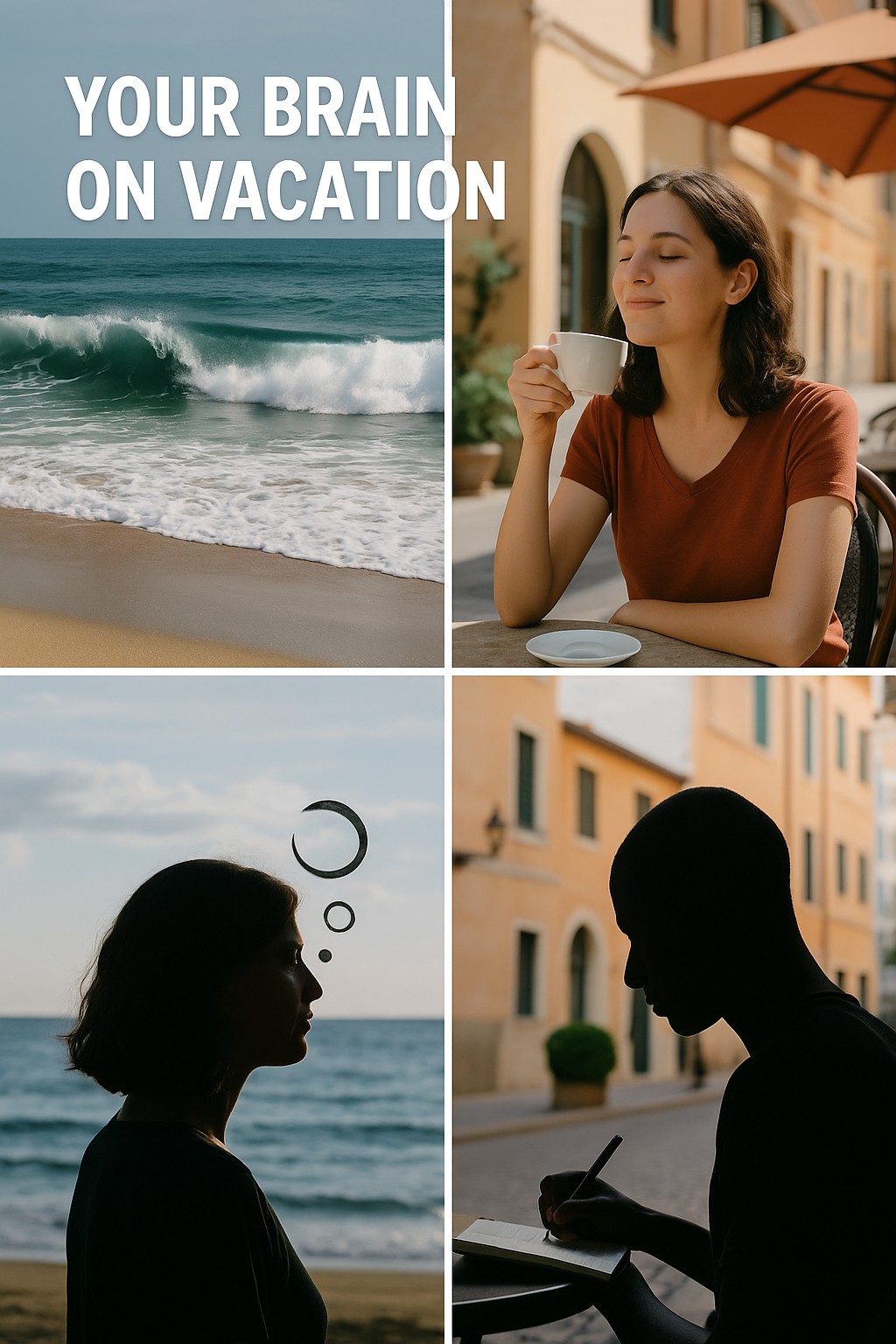
There’s something magical about watching waves crash on a beach or sipping coffee in a quaint café in a city far from home. Suddenly, ideas start bubbling up. You feel lighter, more curious, and somehow, more creative. It’s not a coincidence—it’s your brain on vacation.

We often think of creativity as something that shows up at a desk, during brainstorming sessions, or with a deadline looming. But more often than not, real inspiration comes when we step away from the grind.

Vacations give us what our busy lives rarely do: space. Space to breathe. Space to think. Space to not think. When we’re not constantly responding to emails or juggling responsibilities, our minds begin to relax. And that relaxation is fertile ground for creativity. Studies have shown that when the brain is at rest—like when daydreaming or walking on a beach—it enters a default mode network that’s linked to imagination and problem-solving.

Changing Scenery, Changing Perspective

New environments spark new thoughts. Even the smallest changes—a different language, a new smell, unfamiliar architecture—jolt the brain out of autopilot. You start noticing things again. You observe. You wonder. That’s when the magic happens. That’s when the song lyric appears, the storyline unravels, or the perfect business idea falls into place.

No Pressure, Just Possibility

On vacation, there’s no pressure to “be productive.” Ironically, that’s often when we’re the most productive in the creative sense. A random moment on a trail or while people-watching in a plaza might unlock something that weeks of focused effort couldn’t. When the brain is relaxed, it’s better at connecting dots and making unexpected leaps.

My Takeaway? Pack a Notebook

I’ve learned to always carry a notebook (or at least a phone with a notes app). Inspiration doesn’t keep office hours, and vacations are proof of that. Whether it’s a lyric, a business idea, a joke, or a vision for a project—if it comes while I’m staring at a mountain or floating in a pool, I write it down. That idea may not exist had I not taken the break.

So, the next time you feel stuck, maybe what you really need isn’t more effort—it’s a suitcase. Inspiration might be waiting just beyond the baggage claim.

Posted in Uncategorized | Leave a comment

August: The Month That Forgot It Had a Purpose

August is the middle child of the calendar—awkward, hot, and constantly trying to prove it matters. It doesn’t. While January is out here reinventing lives and December is hosting year-end galas, August just…exists. It’s like the tambourine of months—technically part of the band, but no one really knows why.

As a musician and cultural advocate, I can confirm: August is the month when productivity takes a long nap and creativity sweats profusely in front of a fan. Rehearsals slow down. Some people pretend they’re “on retreat,” which is code for “don’t email me until after Labor Day.” And the only rhythm anyone keeps is the dull beat of their forehead hitting the desk while trying to write grant reports in 90% humidity.

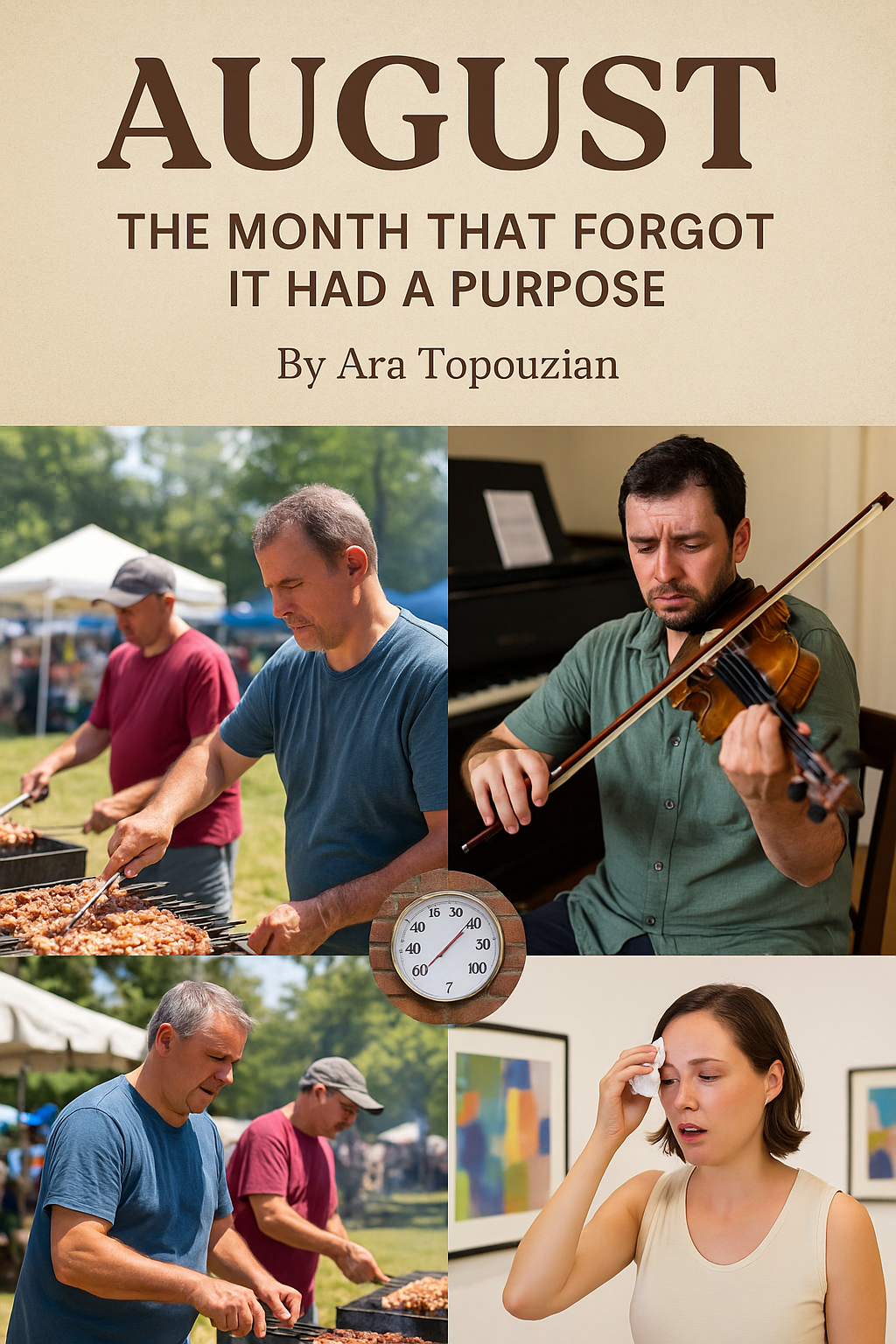
Even festivals—our cultural bread and butter—start to blur together. But August is always anchored by the Grapes Blessing Picnic, the crown jewel of Armenian summer gatherings. It’s the one time a year when families gather in the blazing heat to celebrate tradition, faith, and food. I usually find myself grilling kebab with one of my brothers, both of us sweating like we’re in a sauna but somehow loving every minute of it. The scent of meat on the grill, the buzz of music and laughter, and the familiar rhythm of Tamzara under a summer sun—it’s hot, it’s chaotic, it’s perfect.

Visual artists don’t fare much better. Galleries either shut down for the “summer lull” or bravely mount exhibits called things like Sweat: A Study in Perspiration and Existential Dread. Outdoor art fairs become obstacle courses of sunburn, melted ice cream, and explaining for the 47th time that yes, this painting is for sale but no, I won’t take $10 and a hot dog.

Even culturally, August struggles. July has fireworks. September has back-to-school symphonies of fresh pencils and new planners. August? It has a weird obsession with beige. No major holidays. Just a vague promise that something exciting might happen soon—like cooler weather or, God willing, a concert indoors.

And yet… there’s a strange beauty in this purposelessness. In the sluggish pace. In the awkward in-between. August gives us permission to unplug, tune our instruments in peace, sketch bad ideas without judgment, and daydream about fall premieres that will totally happen (but probably won’t).

So here’s to you, August: the underachieving, overly sweaty, culturally confused month we love to complain about. You may not know your purpose, but maybe that’s the point. You’re the intermission of the year—awkward, necessary, and slightly too long.

Let’s just not pretend you’re anyone’s favorite. Not even yours.

Posted in Humor | Leave a comment

Old Tunes, New Energy: A Reflection from the AYF Jr. Olympics Dance

I recently had the opportunity to perform with The Hye Vibes, led by Mark Gavoor and friends, at the Armenian Youth Federation (AYF) Junior Olympics in Chicago, IL. It was a weekend filled with spirited competition, tradition, and a hopeful dose of the unexpected.

As musicians, we often talk about the decline of traditional music. We worry that as younger generations grow up surrounded by streaming playlists and fast-moving trends, the centuries-old sounds of our ancestors may quietly disappear. I’ve heard it said—maybe even believed it myself—that in another generation, this music might fade from the dance floor and the community memory.

But as I sat behind my kanun and looked out at a crowd of teens dancing—really connecting—with music that’s well over 100 years old, I had to pause. These young people weren’t just being polite. They were present. They were joyful. They were in it.

It made me question: Is the story of decline really the whole story? Or do we sometimes miss the signs of life because we’re looking in the wrong places?

The future of Armenian music is not set in stone. It’s a living question. And in that packed church dance hall in Chicago, backed by live Armenian music, I saw a glimpse of the answer. And it was dancing.


Posted in Armenian, culture, music | Leave a comment

The Death of the Compact Disc (But Not Its Charm)

Let’s be honest: the compact disc is basically dead. Not in a dramatic, memorial-service kind of way—but more like a quiet retirement that nobody talks about. Streaming took over, downloads dwindled, and suddenly the shiny little discs we once proudly stacked in car visors and living room shelves became, well… drink coasters.

I say that with love. As a musician who came up in the era when having physical albums was the mark of being “official,” I still have boxes of my CDs sitting quietly in the garage, waiting for their next act. And I’ve found it—sort of.

These days, I’ve embraced the afterlife of the compact disc with a mix of humor and nostalgia. When I perform and tell stories—about Armenian village music, about tradition, about the quirks of carrying a kanun through TSA—I often end my sets by giving away CDs. Not for sale, not for profit, just as a little keepsake. A musical bonus. A conversation starter. Something for people to tuck into their bags or pop into the one remaining CD player in their 2006 Camry (you know who you are).

And yes, I’ve joked that they make great drink coasters. A little glossy, a little reflective, and they do hold a cold glass of bourbon quite well. But truthfully, there’s something lovely about handing someone a piece of music they can hold—artwork, liner notes, and all. It’s tactile. It’s nostalgic. It’s personal.

The digital world is convenient, but a CD still feels like a gift. So if you ever catch me live, don’t be surprised if I slip you one. It might not spin in your car, but it’ll still carry the story.

Long live the coaster. Long live the music.

Posted in Humor | 2 Comments