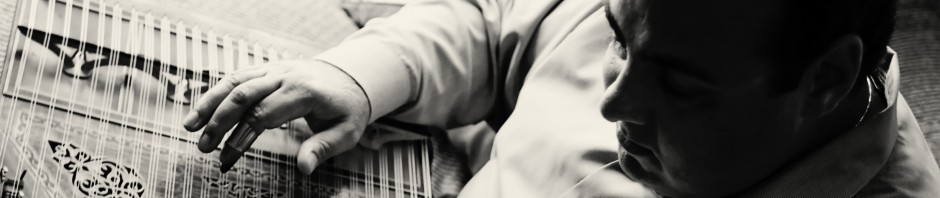
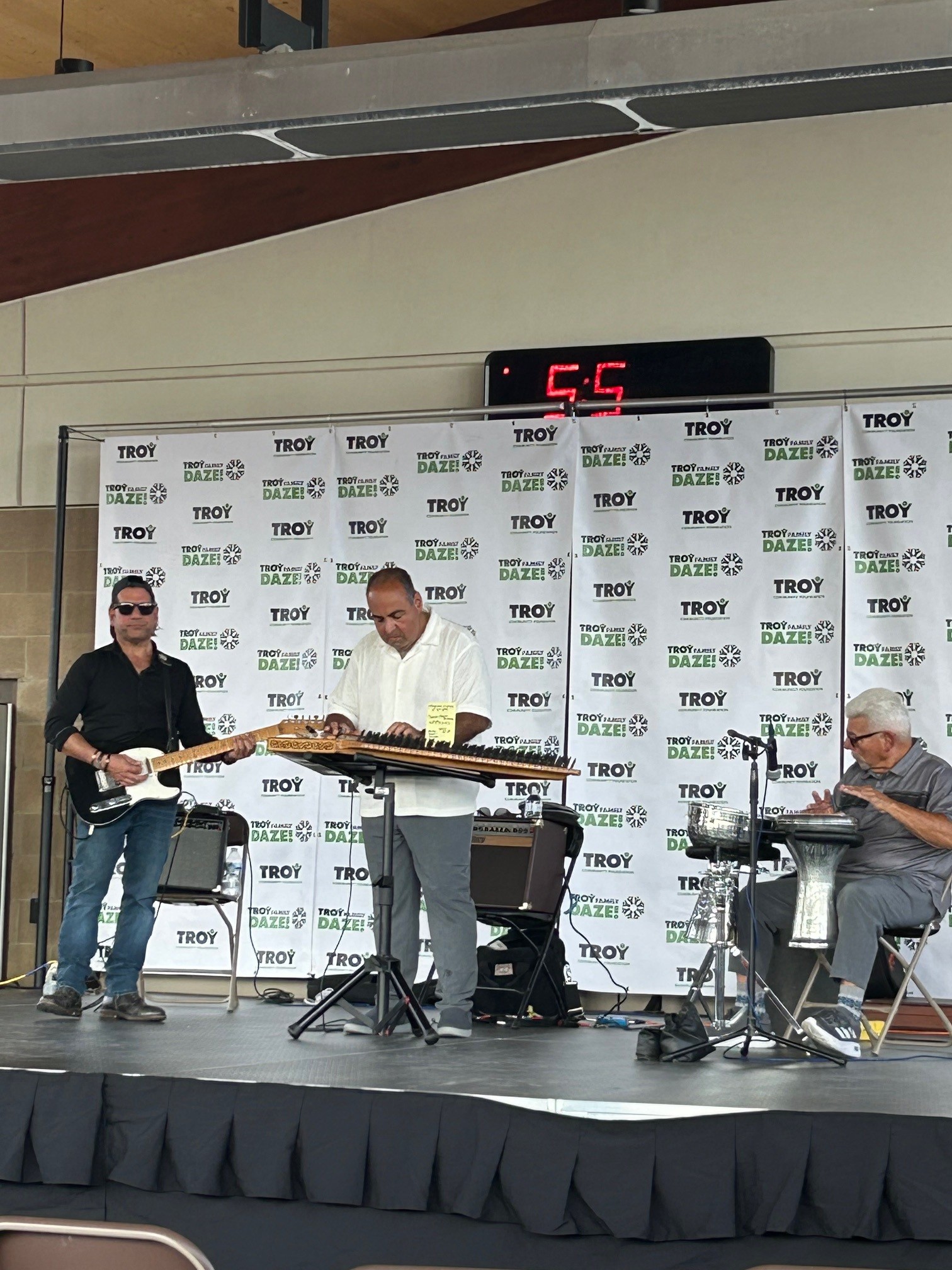
Ara, George, and Jerry performing at Troy Family Daze during Global Troy’s heritage day.
Last weekend, I had the opportunity to perform at Troy Family Daze in Troy, Michigan, as part of their Global Troy celebration. I shared the stage with my trio — Jerry Gerjekian on dumbegs and George Nigosian on guitar — for the weekend finale of the festival. The day we performed was filled with heritage-rich performances, each one spotlighting the cultural roots of the artists. Standing on that stage, I couldn’t help but reflect on the role festivals like this play in preserving and sharing the music of our heritage.
The Power of World Music Festivals
World music festivals are more than entertainment — they are living classrooms. Each drumbeat, melody, and lyric carries history. They tell stories of migration, struggle, joy, and resilience. For many in the audience, hearing an Armenian kanun, an Indian sitar, or an African kora for the first time opens a door to another culture they might not otherwise encounter.
Music bypasses language. It builds empathy. It invites curiosity. A single set at a festival can spark someone’s interest in exploring a culture more deeply — through food, travel, literature, or personal connection.
Michigan’s Place in the Global Music Scene
Michigan has no shortage of music festivals. From Detroit’s legendary Concert of Colors to the Ann Arbor Summer Festival, we see moments where global music traditions are celebrated. And yet, I often wonder: Do we have enough true world music festivals here?
Many of Michigan’s festivals mix heritage acts into broader lineups, but there is still room for more platforms dedicated exclusively to world and folk traditions. Michigan is home to a diverse and growing global community, and world music festivals are a natural way to reflect and honor that.
Learning Heritage Through Performance
As an Armenian musician, every performance is a chance to keep tradition alive. When I play the kanun on a stage like Global Troy, I’m not just playing an ancient instrument — I’m sharing centuries of Armenian history with new audiences. Paired with Jerry’s rhythms on the dumbeg and George’s guitar textures, our trio brings an old-world sound into a new-world setting.
For other artists that weekend, it was the same story. Each act carried the heritage of their ancestors into a suburban Michigan park, offering the crowd a journey across borders without leaving Troy.
The Best Way to Understand Culture?
Are world music festivals the best way to understand culture? Perhaps not the only way, but certainly one of the most powerful. Books and films teach us, but music touches us. It’s experiential. It’s visceral. It makes you feel before you even understand.
Festivals are not the end of cultural discovery — they are the spark. They can ignite a lifetime of learning, inspire someone to seek out community, or simply plant a seed of respect for traditions different from their own.
Building Bridges Through Music
My experience at Troy Family Daze reminded me that world music festivals are not just about preserving traditions — they are about building bridges. They bring people together across backgrounds, generations, and languages. In an increasingly divided world, these moments of cultural exchange matter more than ever.
So the next time you see a flyer for a world music festival in Michigan — whether it’s in Detroit, Ann Arbor, or right in your own backyard — I encourage you to go. Listen. Learn. Let the music become your passport.


 HYE Times